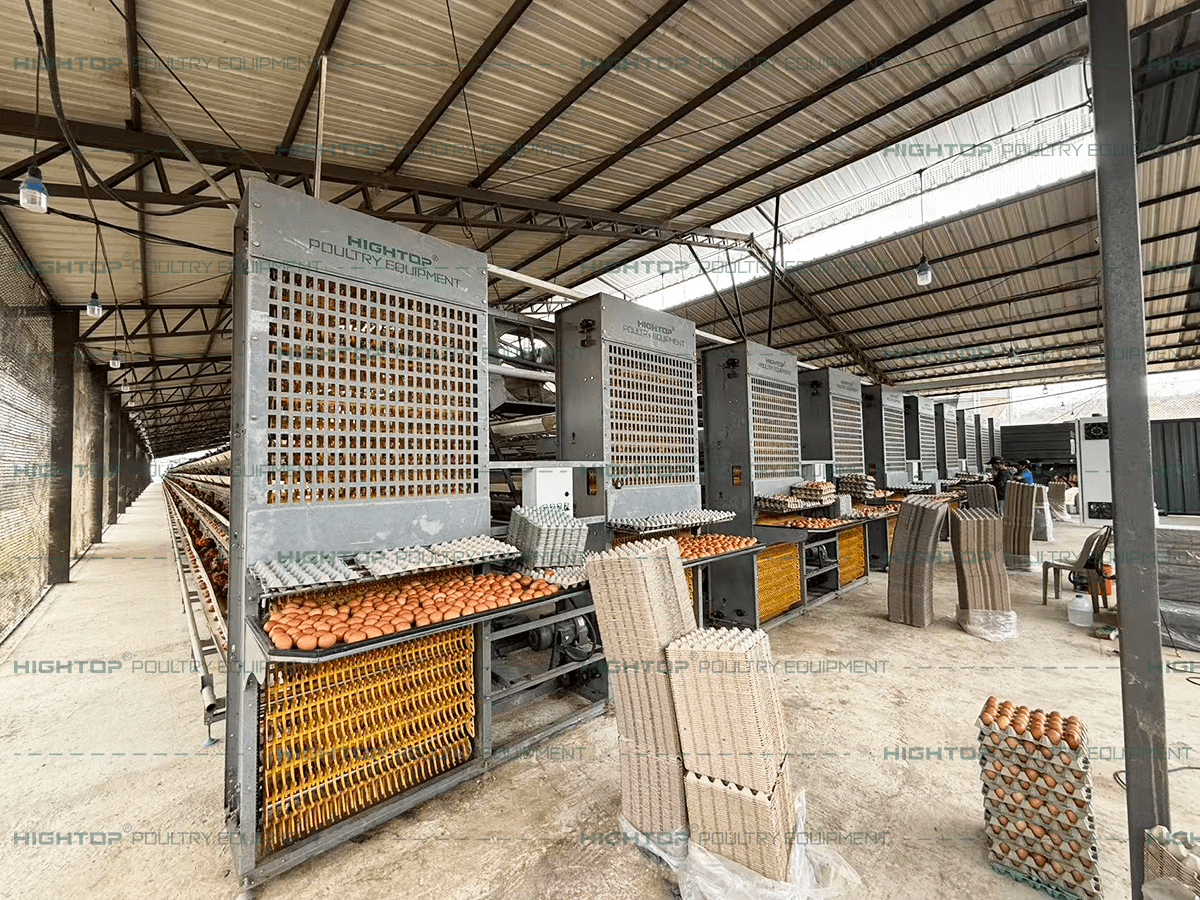
This automatic layer farm project in Ecuador shows how equipment design, proven local references, and responsive technical service can work together to support a poultry investment decision.
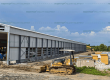
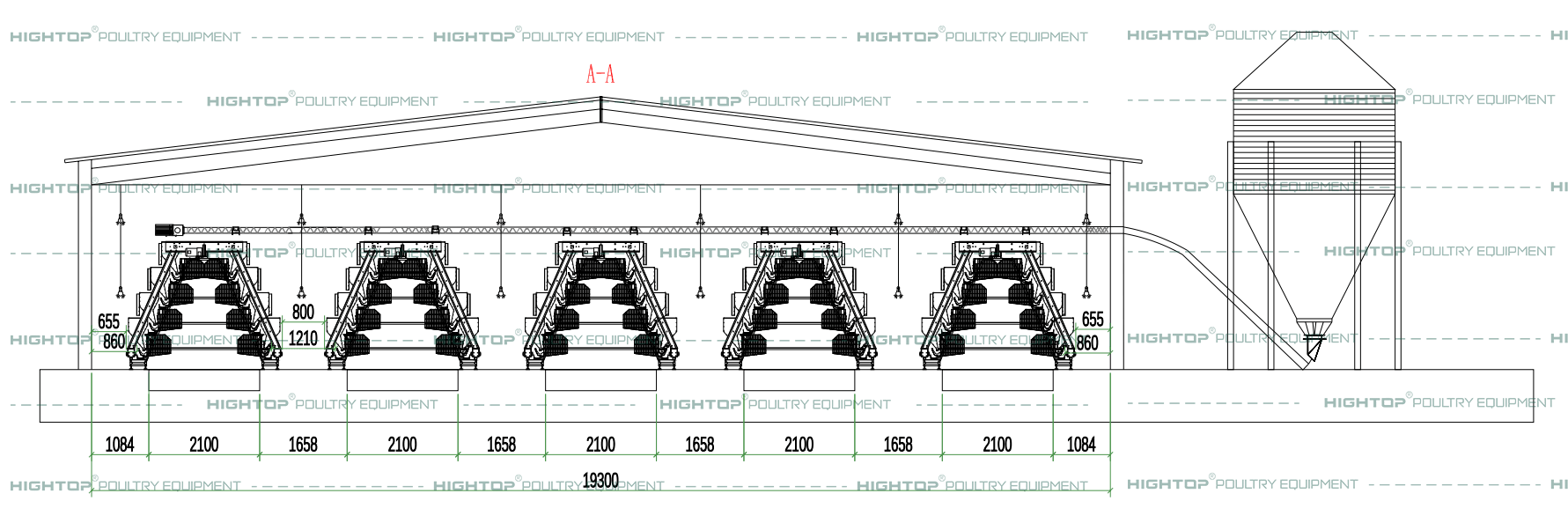
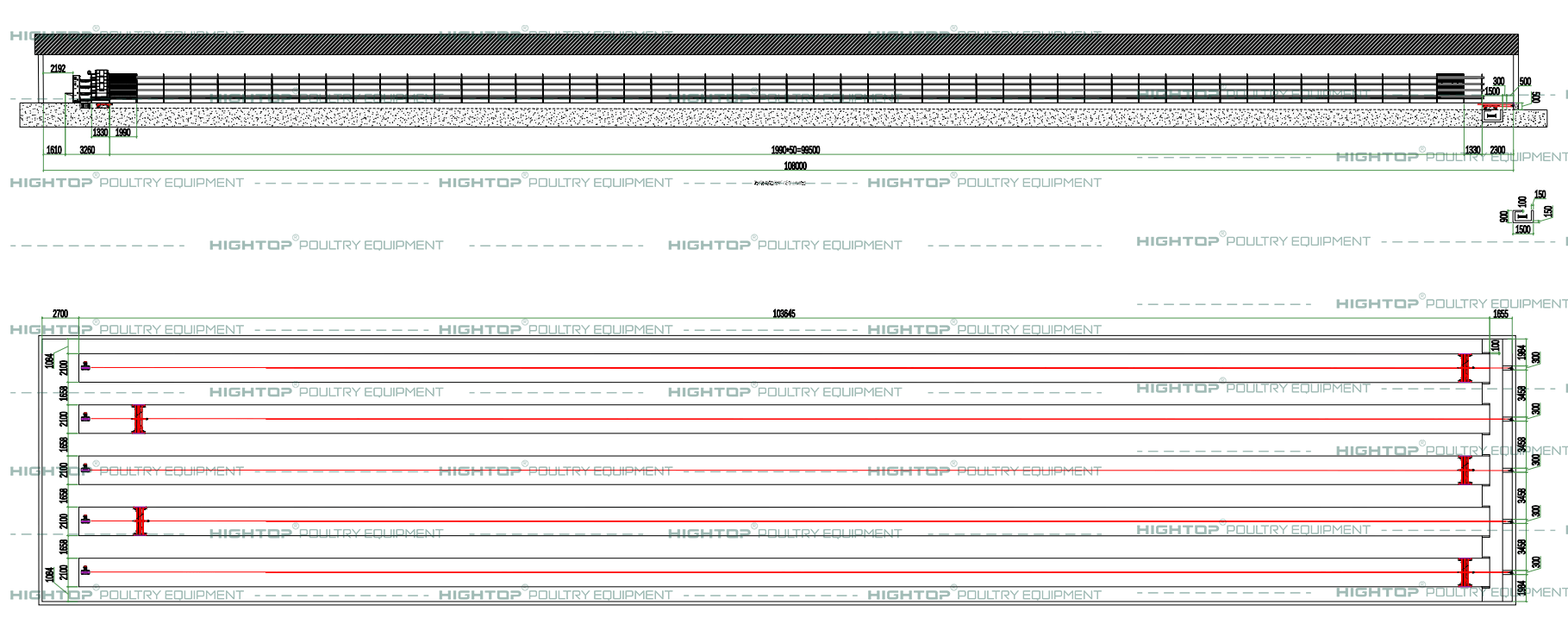
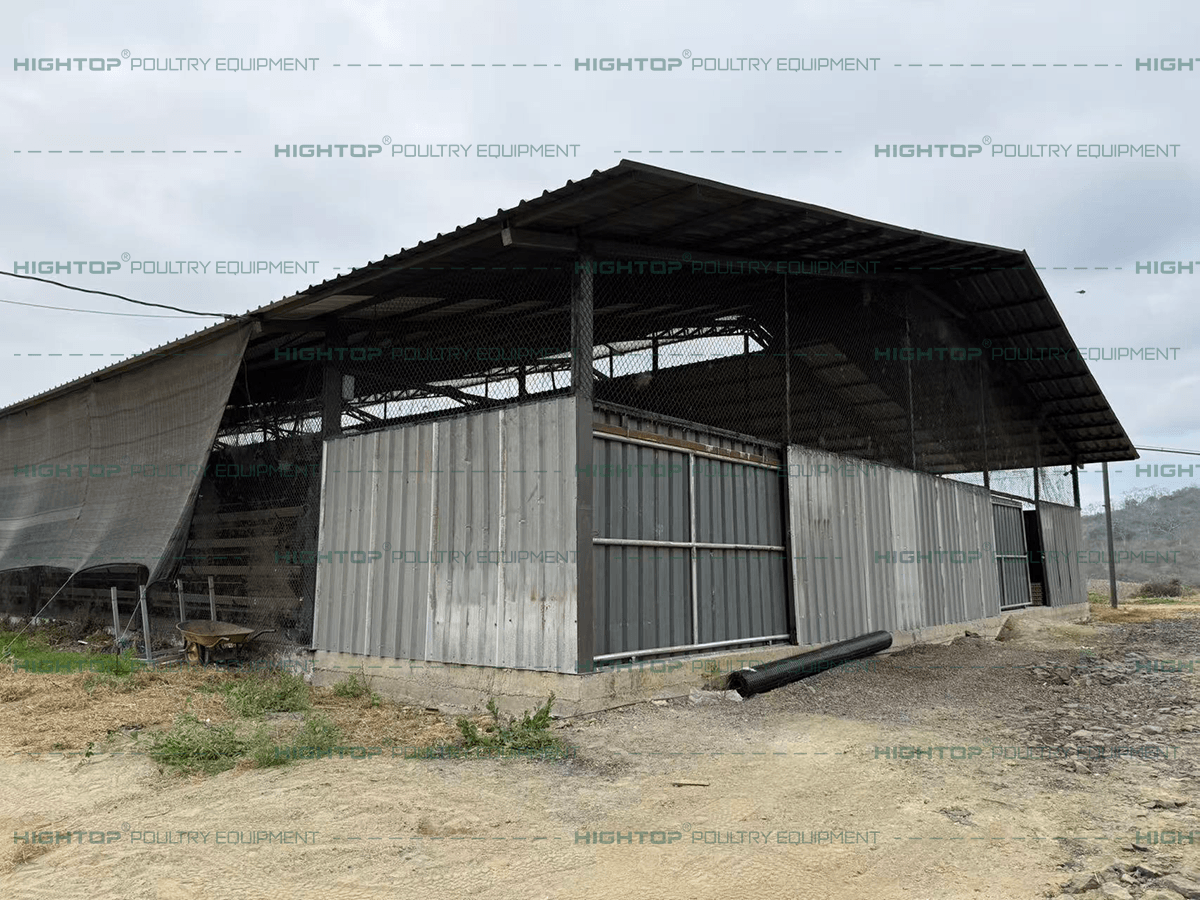
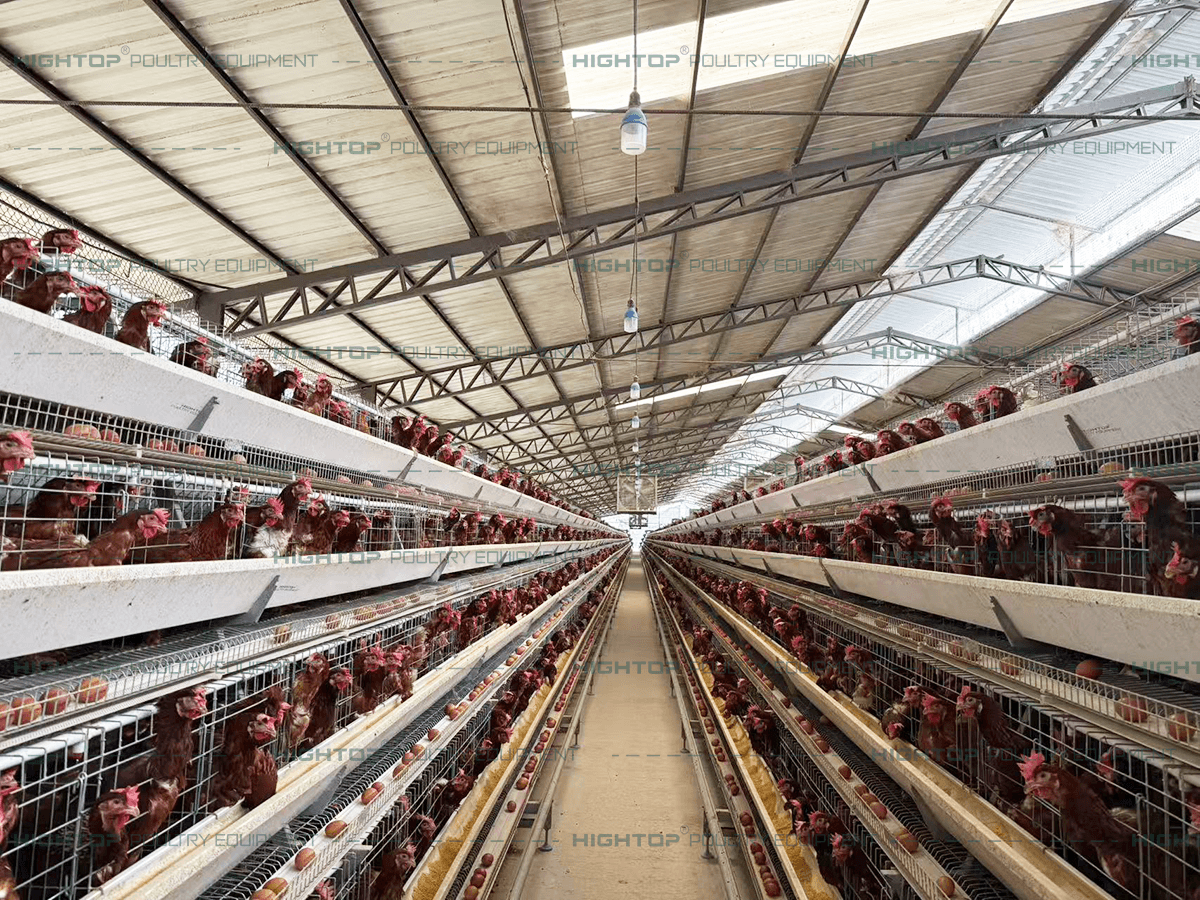
The project uses a 4-tier A-Type automatic layer cage system inside an open poultry house measuring 108 × 19.3 × 3.5 meters. Five cage rows are installed in the house, with 50 cage sets in each row and 250 sets in total. The completed layout provides capacity for 30,000 laying hens.
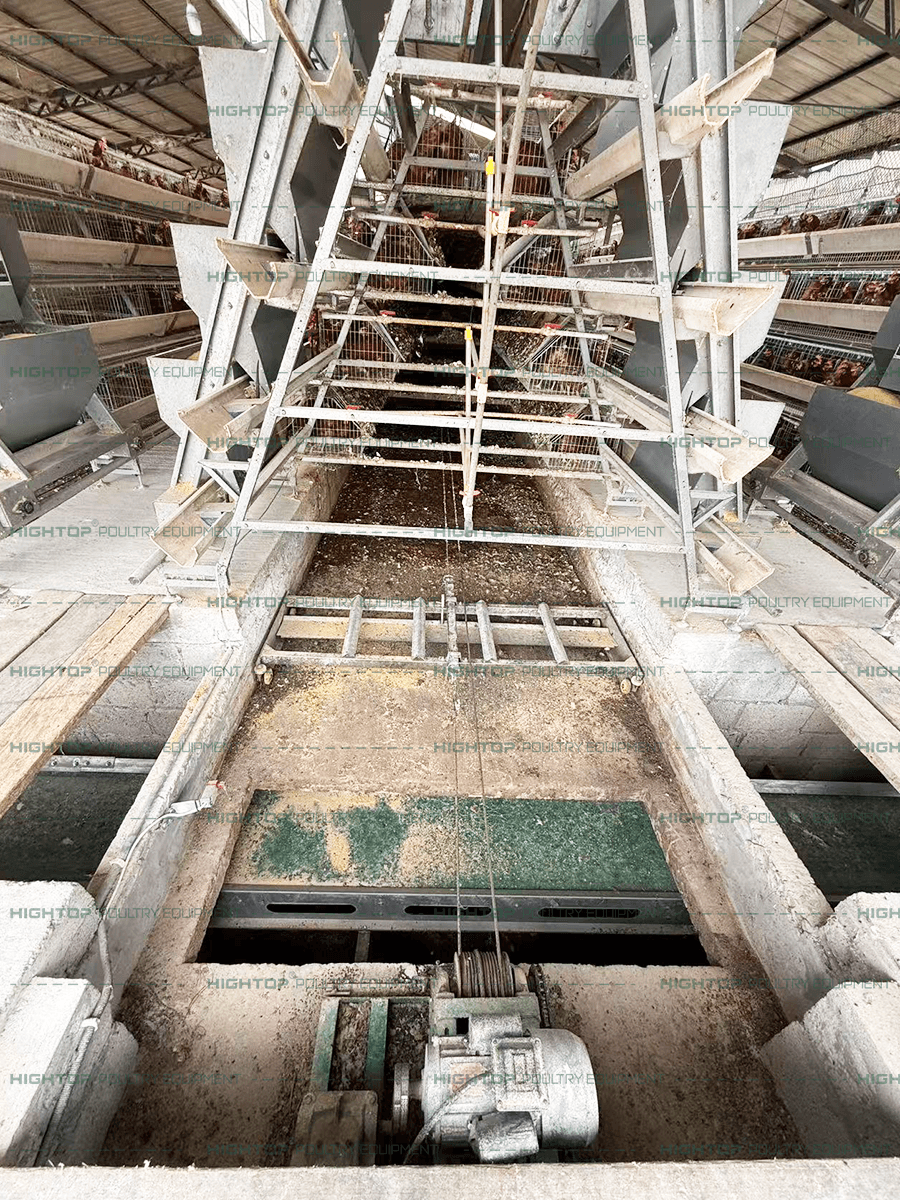
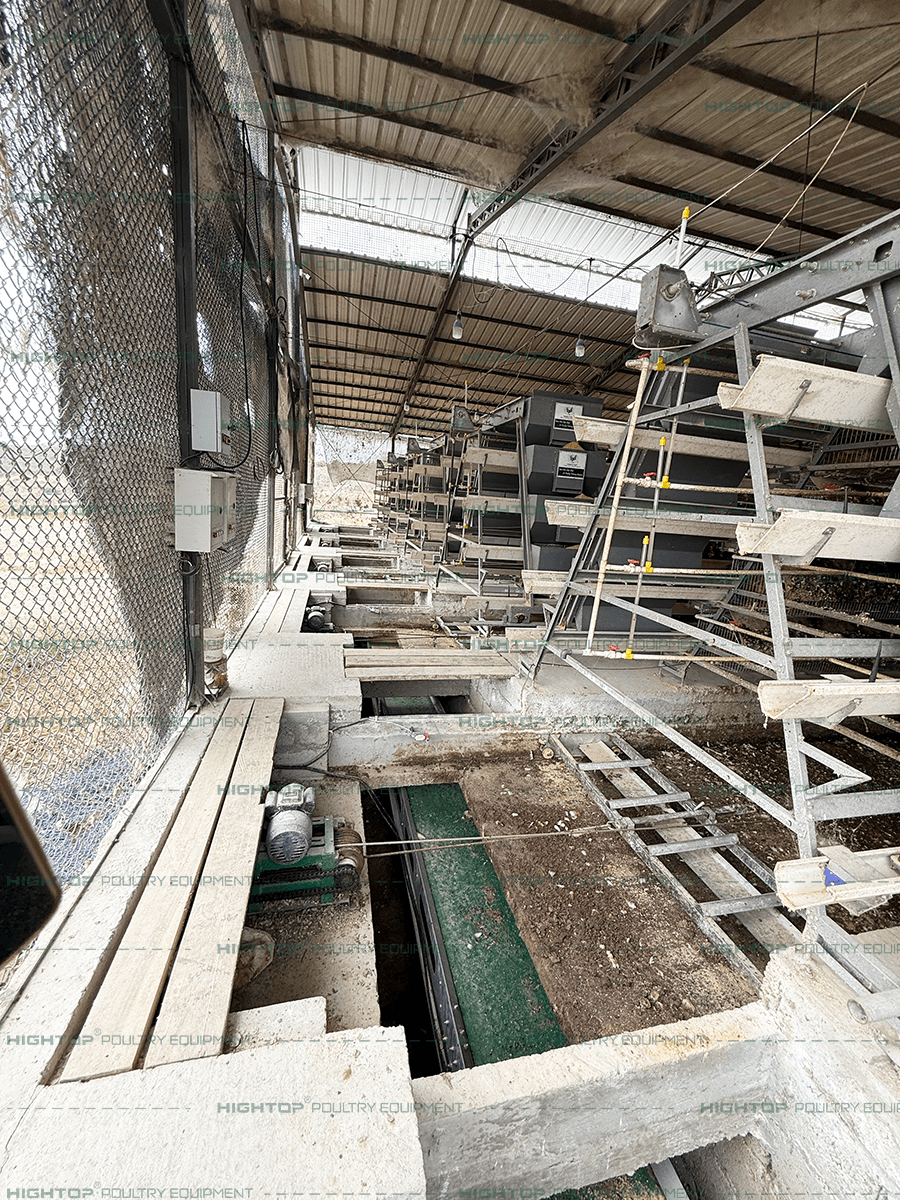
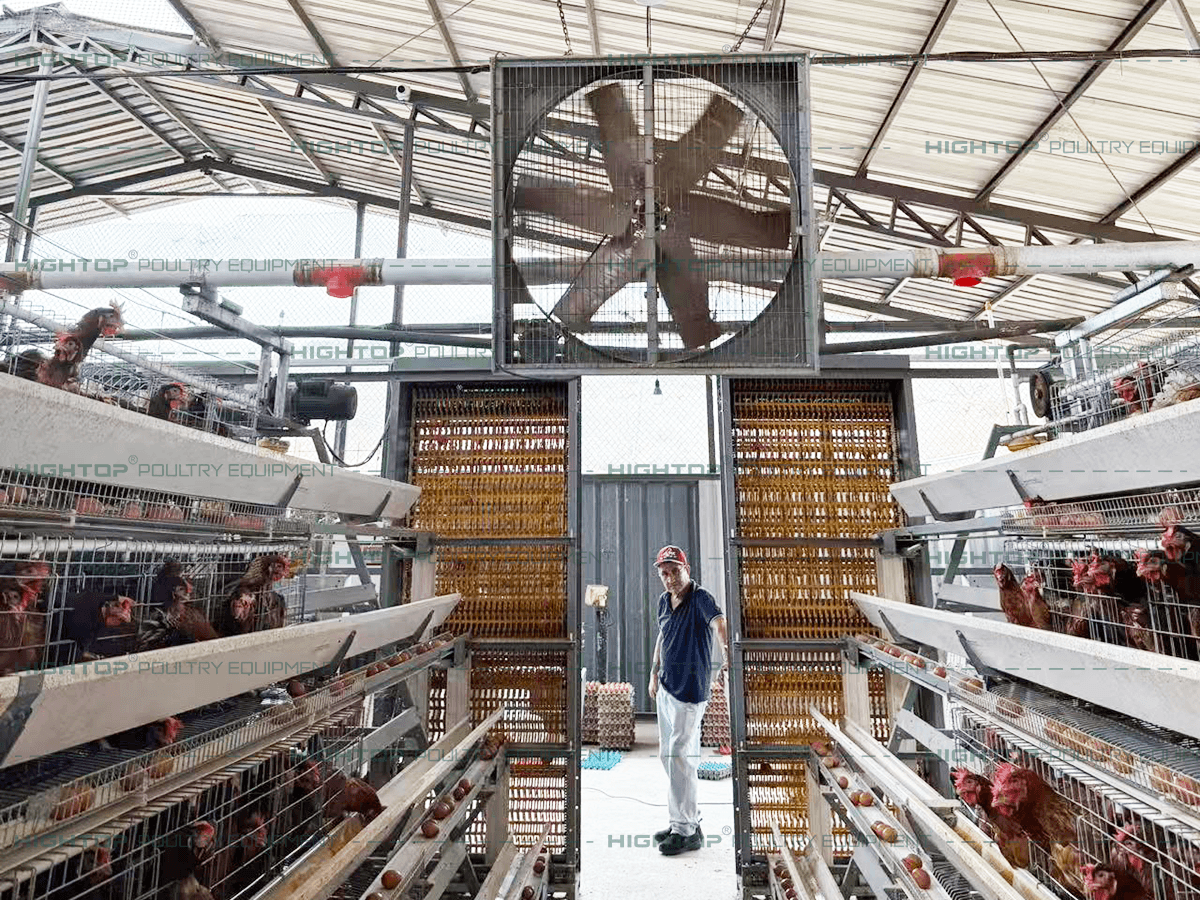
HIGHTOP supplied the layer cages together with automatic feeding, automatic egg collection, and an automatic manure-removal system. The manure system was customized around the customer’s own manure collection and fermentation plan: scrapers move manure along the channels beneath the cage rows, and a transverse conveyor collects it at the end of the house and transports it to a ground-level discharge point outside.
Basic Project Specifications
| Item | Details | Item | Details |
|---|---|---|---|
| Project Location | Ecuador | Poultry House Type | Open poultry house |
| House Dimensions | 108 × 19.3 × 3.5 m | House Capacity | 30,000 laying hens |
| Cage System | 4-tier A-Type automatic layer cage | Cage Layout | 5 rows × 50 sets per row |
| Total Cage Sets | 250 sets | Calculated Capacity | 120 birds per cage set |
| Automatic Systems | Feeding, egg collection and manure removal | Manure Discharge | Ground-level discharge outside the house |
| Installation Support | HIGHTOP cooperative local installation team | Current Status | Completed and in normal operation |
A Purchasing Decision Built on Repeated Proof
Before placing the order, the customer had repeatedly seen HIGHTOP poultry projects through the company’s social media posts and detailed website case studies. These showed cage layouts, installed systems, completed houses, and equipment operating under real farm conditions.
The strongest proof came when the customer visited an existing HIGHTOP customer’s farm. He examined the equipment and installation in person and confirmed the order only after he was satisfied with the operating project. This gave the buyer practical evidence beyond a quotation or product description.
Responsive Communication Across the Time Difference
Despite the time difference between China and Ecuador, the HIGHTOP team maintained fast, cooperative communication on layout, equipment scope, manure removal, installation, and site preparation. Timely answers kept technical decisions moving and helped the open-house layout, elevated cages, manure channels, scrapers, and transverse conveyor develop as one coordinated design.
Five-Row Layout for a 30,000-Layer Open House
The 108-meter-long and 19.3-meter-wide house accommodates five rows of 4-tier A-Type cages. Each row contains 50 sets, giving 250 sets and a calculated capacity of 120 hens per set. The layout reaches the required 30,000-bird capacity while retaining working aisles for inspection, egg handling, feeding equipment, and maintenance.
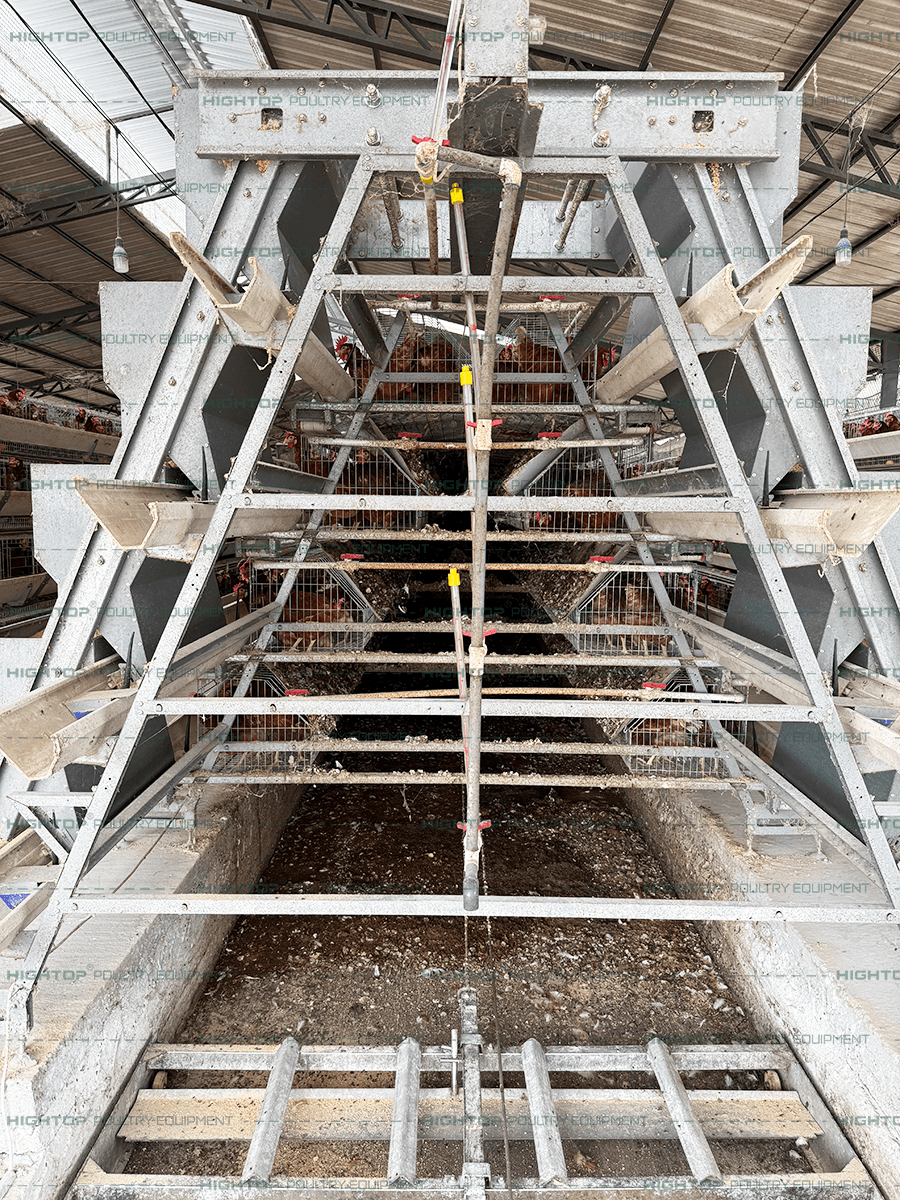
The cages were raised by approximately 30 centimeters to form manure channels beneath the rows and create clearance for the scraper equipment.
A Manure-Removal System Designed Around Farm Income
Manure handling is one of the most distinctive parts of this project. The customer collects and ferments the manure to create additional farm income, so the discharge arrangement was selected around this process.
The removal process works in three stages.
1. Manure Falls into the Channels
Manure falls into the channels below the elevated A-Type cages. The added clearance accommodates the scraper mechanism and separates the birds from the manure-handling area.
2. Scrapers Move Manure to the House End
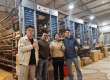
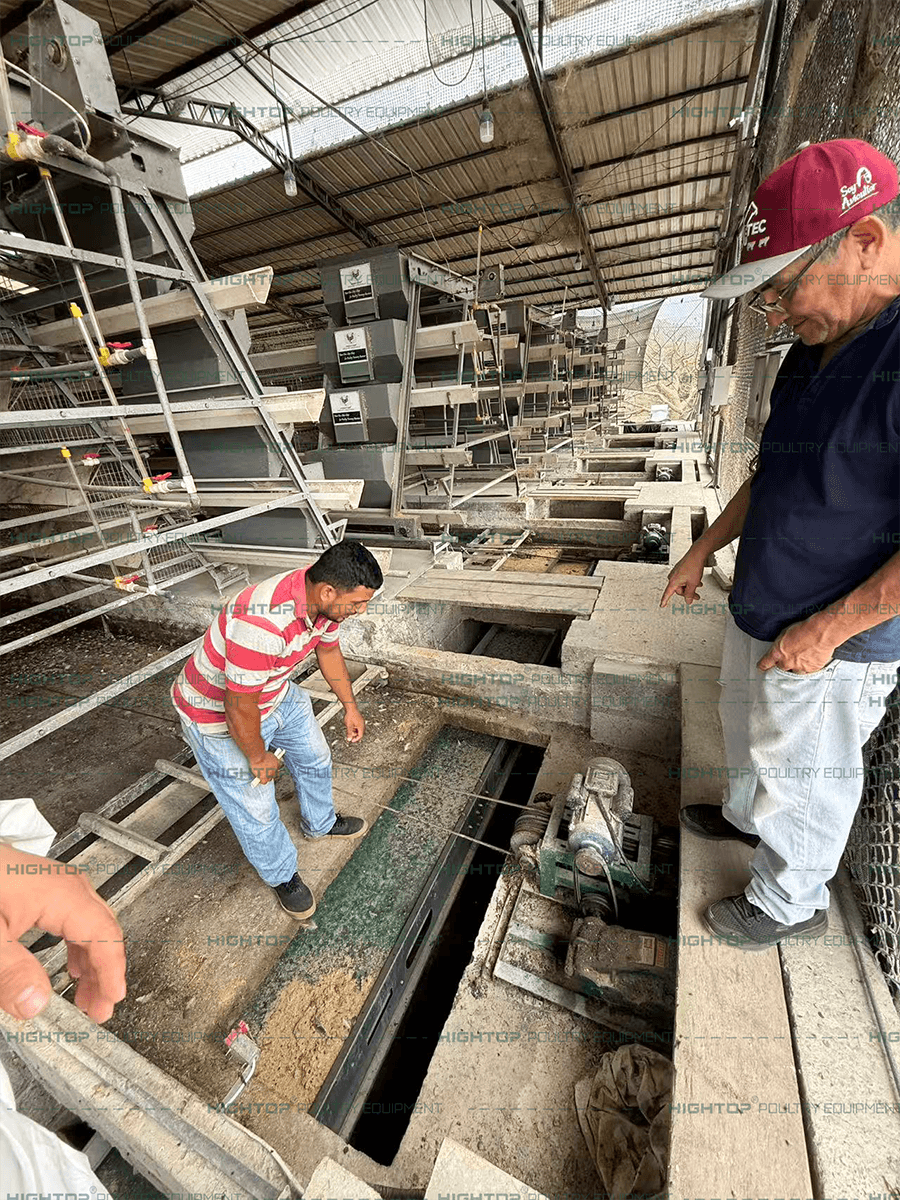
When cleaning is required, scraper units pull accumulated manure along the channels toward the house end. It then drops through the row-end outlets onto a transverse manure conveyor. Project photographs show workers inspecting this important transfer point.
3. The Transverse Conveyor Moves It Outside
The transverse conveyor receives manure from all five rows and carries it to a ground-level collection area outside the building.
Some farms add an inclined conveyor that lifts manure high enough for a truck to park underneath and receive it directly. This project does not include that conveyor. Because the customer collects the material for fermentation and commercial use, ground-level discharge fits the farm’s process and avoids investment in an unnecessary component. The system therefore automates removal from beneath the cages to the outside collection point; subsequent collection and loading are handled separately.
Local Installation Support in Ecuador
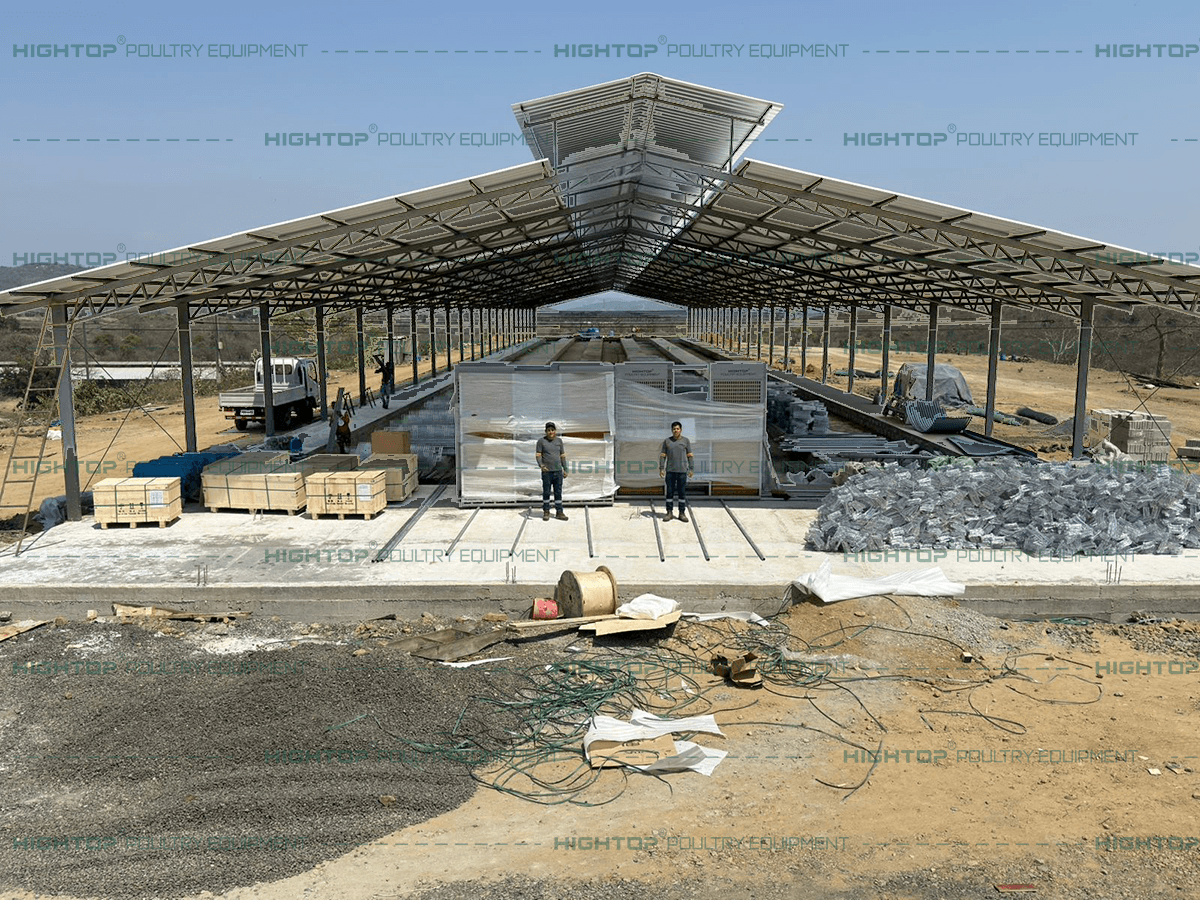
Installation capability was another reason the customer selected HIGHTOP. A cooperative installation team in Ecuador could assist with cage assembly, automatic-system installation, alignment, inspection, and farm coordination. This reduced dependence on long-distance guidance and provided a more practical local support route.
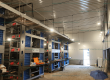
Project photographs document equipment arrival, cage installation preparation, the delivered feeder, and inspection of the scraper discharge and transverse conveyor connection.
From Equipment Delivery to Normal Farm Operation
The images record the project from equipment arrival and installation preparation through system inspection and normal operation. Overall house views confirm the five-row layout, while close-ups document the egg collector and key manure-transfer points.
What Poultry Investors Can Learn from This Project
- Verify through operating farms: Visiting an existing customer’s farm provides stronger evidence than product descriptions alone.
- Match equipment to the manure destination: Direct truck loading may require an inclined conveyor; ground-level fermentation collection may not.
- Evaluate installation support: A capable local team can simplify assembly and provide a clearer support route.
- Plan connected systems together: Cage elevation, channels, scraper paths, outlets, and the transverse conveyor must function as one design.
Same Equipment: 4-Tier A-Type Automatic Layer Cage
The 4-tier A-Type cage provides the open under-cage space required by this project’s scraper system while integrating with automatic feeding and egg collection. Its project-specific advantages include:
- A five-row arrangement that fits the 19.3-meter house width.
- Open space beneath the cage frames for manure channels and scraper equipment.
- Compatibility with automatic feeding and egg collection.
- Accessible row ends for inspection of manure transfer points.
- Suitability for an open poultry-house configuration.
A product-page link can be added here once the final HIGHTOP A-Type layer cage URL is confirmed.
Why HIGHTOP for Similar Poultry Projects?
This project demonstrates responsive cross-time-zone communication, verifiable operating references, local installation support, and equipment selection based on the customer’s real operating plan. The ground-level manure discharge is a deliberate fit for the customer’s fermentation process rather than a generic configuration.
Plan Your Layer Farm with HIGHTOP
If you are planning a new layer farm or upgrading an existing open poultry house, send HIGHTOP your target bird capacity, house dimensions, local electricity conditions, preferred level of automation, and manure-handling plan.
Our team can use this information to prepare a cage layout and equipment proposal matched to the way your farm will operate—from feeding and egg collection to installation and final manure handling.
Frequently Asked Questions
How many laying hens can this Ecuador poultry house accommodate?
The house is designed for 30,000 laying hens. It contains five rows of 4-tier A-Type cages, with 50 cage sets per row and 250 sets in total.
Why were the A-Type cages raised by approximately 30 centimeters?
The additional height creates manure channels beneath the cage rows and provides working clearance for the scraper manure-removal system.
How is manure removed from the poultry house?
Scrapers pull manure along the channels to the end of the cage rows. It then drops onto a transverse conveyor, which transports it to a ground-level collection point outside the house.
Does this project include an inclined manure conveyor for direct truck loading?
No. The customer collects the manure for fermentation and commercial use, so the selected system discharges it at ground level outside the poultry house. Loading and movement after that collection point are handled separately.
Can HIGHTOP provide installation support in Ecuador?
HIGHTOP has a cooperative local installation team in Ecuador. The available support scope for a new project should be confirmed according to its location, equipment configuration, and construction schedule.
Request A Quote
Please contact us or get quote via the contact form below, we’ll get back to you as soon as possible.