How HIGHTOP Automatic Layer Farming Systems Reduce Egg Breakage and Stabilize Production
For large commercial layer farms, profitability is determined not only by how many eggs hens produce, but also by how many eggs can be collected, transported, and sold without damage.
Egg breakage, unstable laying performance, excessive labor requirements, and frequent equipment maintenance can gradually reduce farm margins. Traditional manual egg collection increases the risk of collision and handling damage, while poorly designed cages, uneven feeding, manure accumulation, and unstable environmental conditions can further affect eggshell quality and flock performance.
HIGHTOP’s H-Type automatic layer farming system is designed to address these problems through coordinated cage structure, automatic feeding, egg collection, manure removal, environmental control, and centralized management. Rather than treating each piece of equipment as an independent machine, the system is designed as an integrated production line for large-scale layer farms.
Why Egg Breakage Is a Major Profit Loss for Commercial Layer Farms
On a farm producing tens of thousands of eggs every day, even a small difference in breakage rate can create a significant long-term financial impact.
Egg damage can occur at several stages:
- Eggs rolling from the cage floor
- Transfer from cage rows to egg belts
- Movement between different conveyor sections
- Central collection and grading
- Manual handling and packing
Reducing breakage therefore requires more than installing an egg conveyor. The cage floor angle, wire surface, conveyor speed, transfer points, buffering structure, and central collection layout must all work together.
HIGHTOP optimizes the egg path from the cage to the collection point to reduce unnecessary impact and secondary handling.
Precision Cage Design Helps Eggs Roll Smoothly
The first step in reducing egg breakage starts inside the cage.
HIGHTOP layer cages use a scientifically designed bottom slope that allows eggs to roll naturally toward the egg collection belt at a controlled speed. The cage wire surface is smooth and hot-dip galvanized, reducing burrs and sharp contact points that may scratch eggshells or cause micro-cracks.
The system also includes protective structures to reduce egg pecking and prevent eggs from remaining inside the cage.
For commercial farms, these structural details are important because egg damage often begins before the egg even reaches the conveyor.
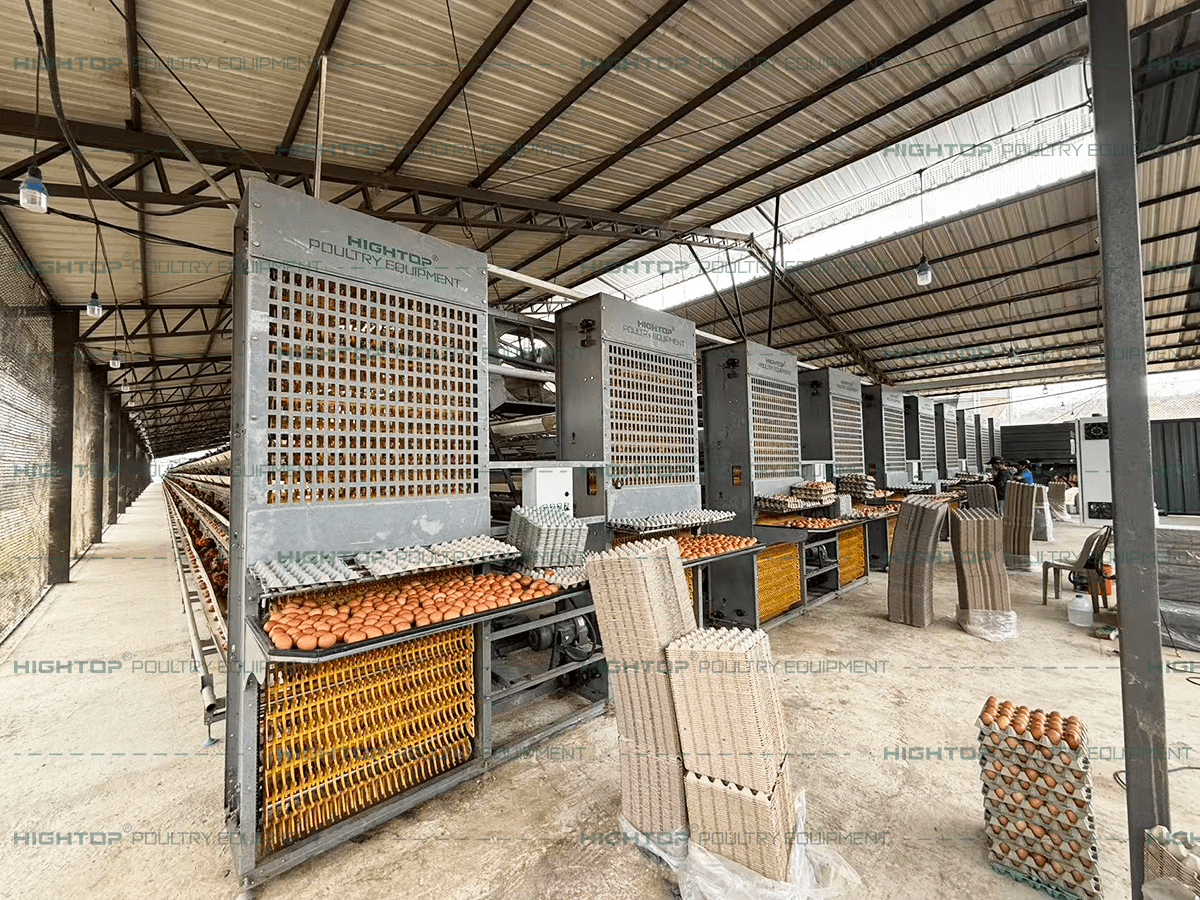
Automatic Egg Collection Reduces Manual Handling
Traditional manual egg collection requires workers to repeatedly enter poultry houses, remove eggs from cages, place them into trays, and transport them manually. Each handling step creates additional opportunities for collision and damage.
An automatic egg collection system significantly reduces this process.
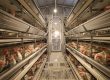
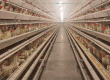
Eggs move directly from each cage tier onto flexible egg belts and are transported toward the front of the poultry house. The conveying speed is controlled to keep egg movement stable and reduce impact between eggs.
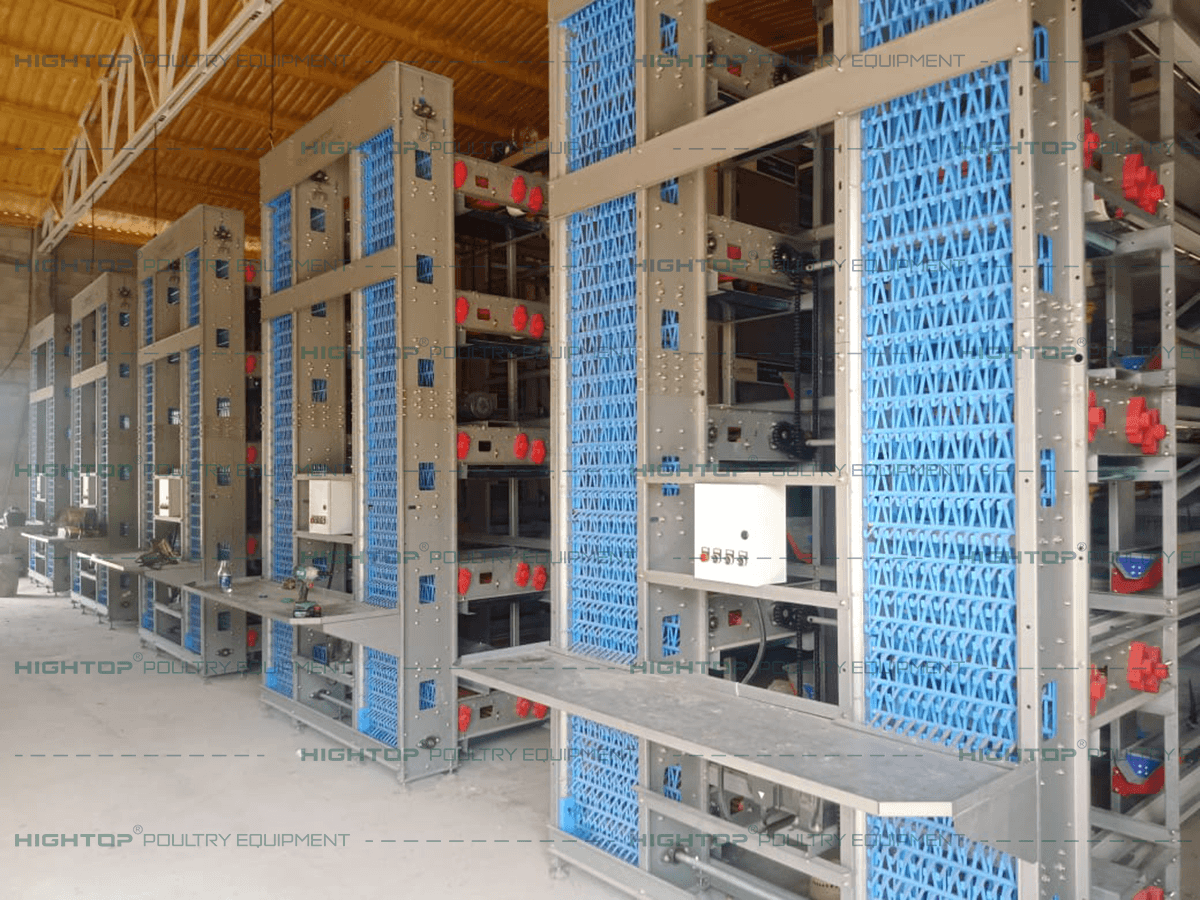
For high-density farms using taller cage systems, the same principle is applied to multiple tiers.
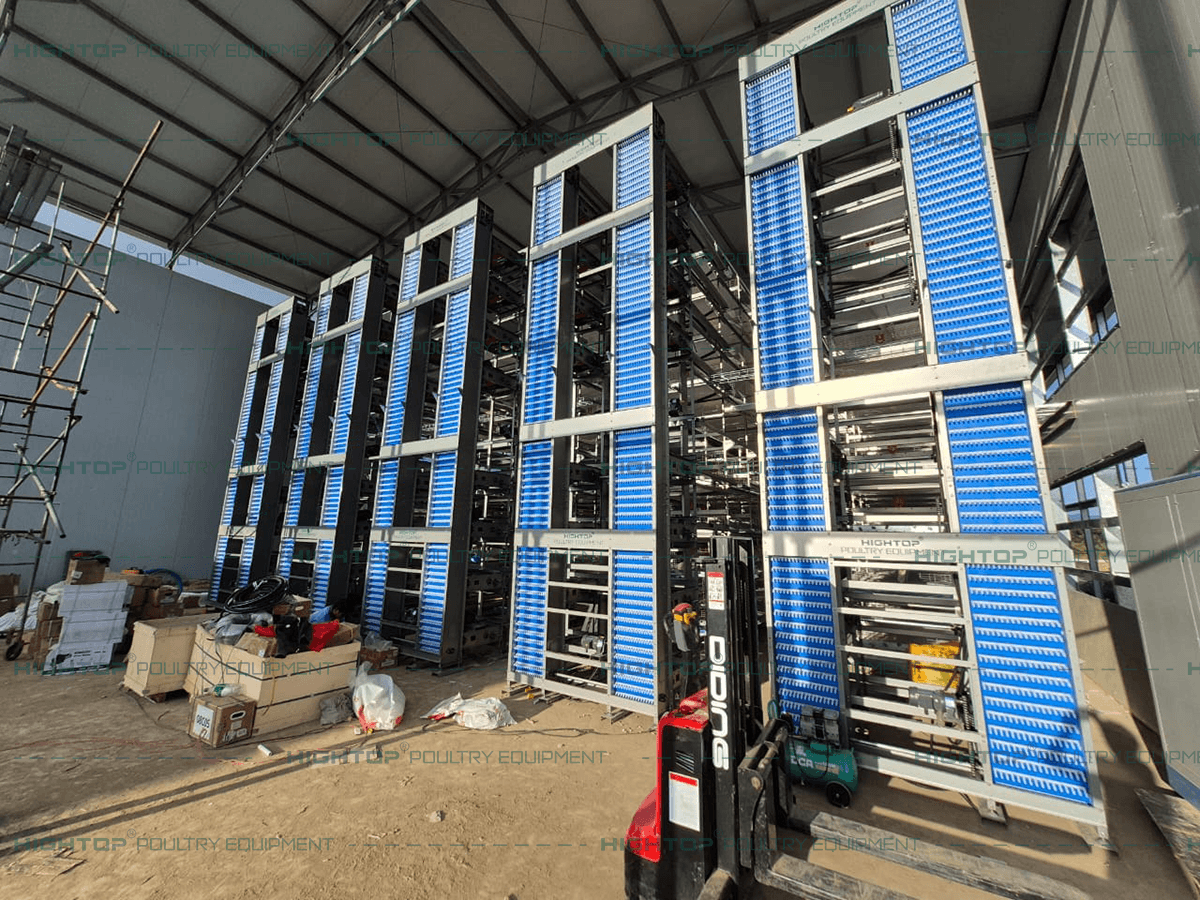
Whether the poultry house uses 5-tier or 8-tier H-Type cages, the objective remains the same: move a large number of eggs efficiently while minimizing unnecessary handling.
Soft Egg Filtering Before Automatic Egg Collection
Not every egg produced by a flock has a normal shell. Soft-shelled eggs or other abnormal eggs can easily break during mechanical collection and contaminate both the equipment and normal eggs.
To reduce this risk, HIGHTOP can install a soft egg filter system in front of the automatic egg collection machine.
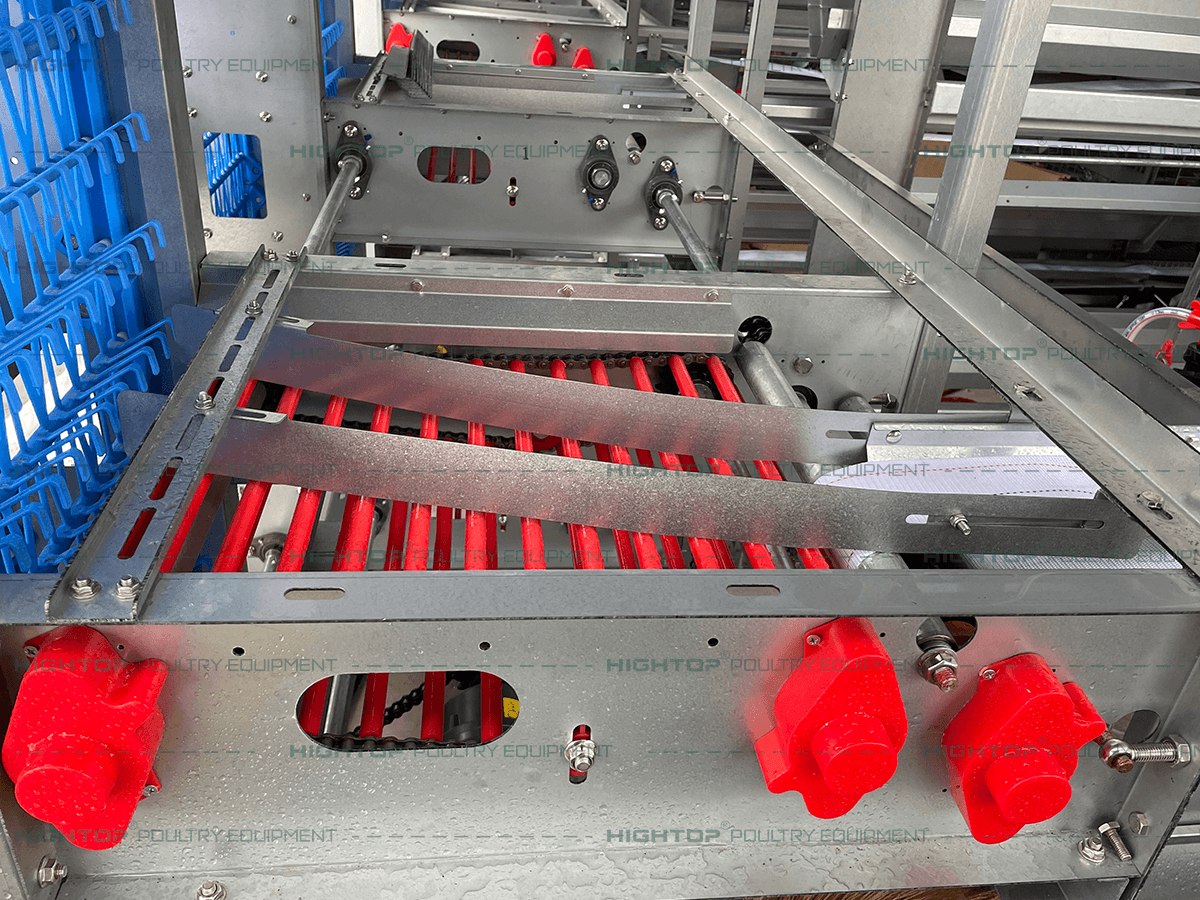
Before eggs enter the automatic egg collector, the soft egg filter helps separate soft-shelled and unsuitable eggs from the normal egg flow.
This prevents fragile eggs from entering the collection machine, where they could break during lifting or transfer and contaminate the conveyor, mechanical components, and other eggs.
For large commercial layer farms, this simple filtering step improves the cleanliness and reliability of the entire egg collection process while reducing unnecessary interruptions for equipment cleaning.
Central Egg Collection Makes Large Farms More Efficient
As farm capacity increases, collecting eggs separately from every poultry house becomes increasingly inefficient.
A central egg collection line connects multiple poultry houses and transfers eggs to one centralized egg room or grading area.
This allows farms to:
- Reduce internal transportation
- Lower labor requirements
- Centralize egg counting and grading
- Improve packing efficiency
- Reduce repeated manual handling
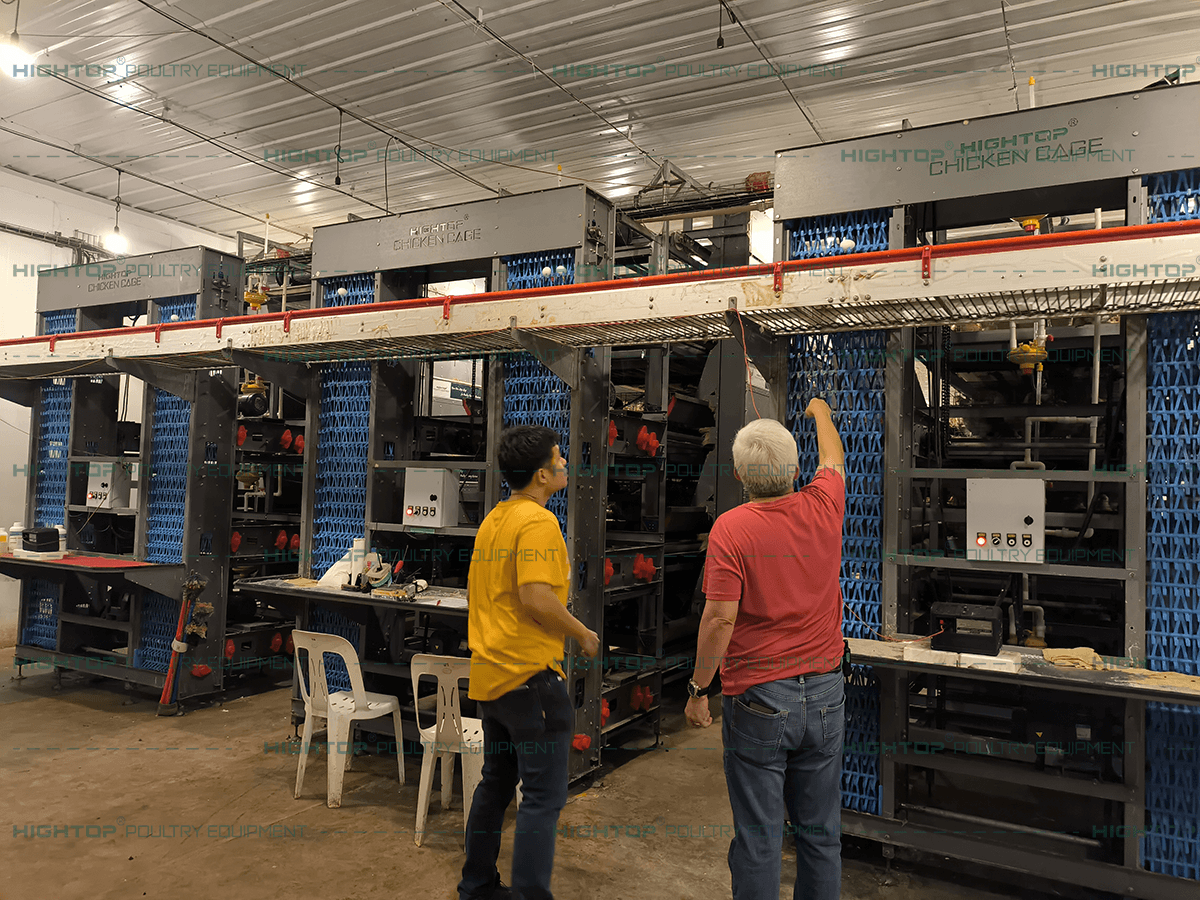
Inside the poultry house, eggs from individual cage rows are transferred to the main collection line.
From there, the central system carries them toward the collection or processing area.
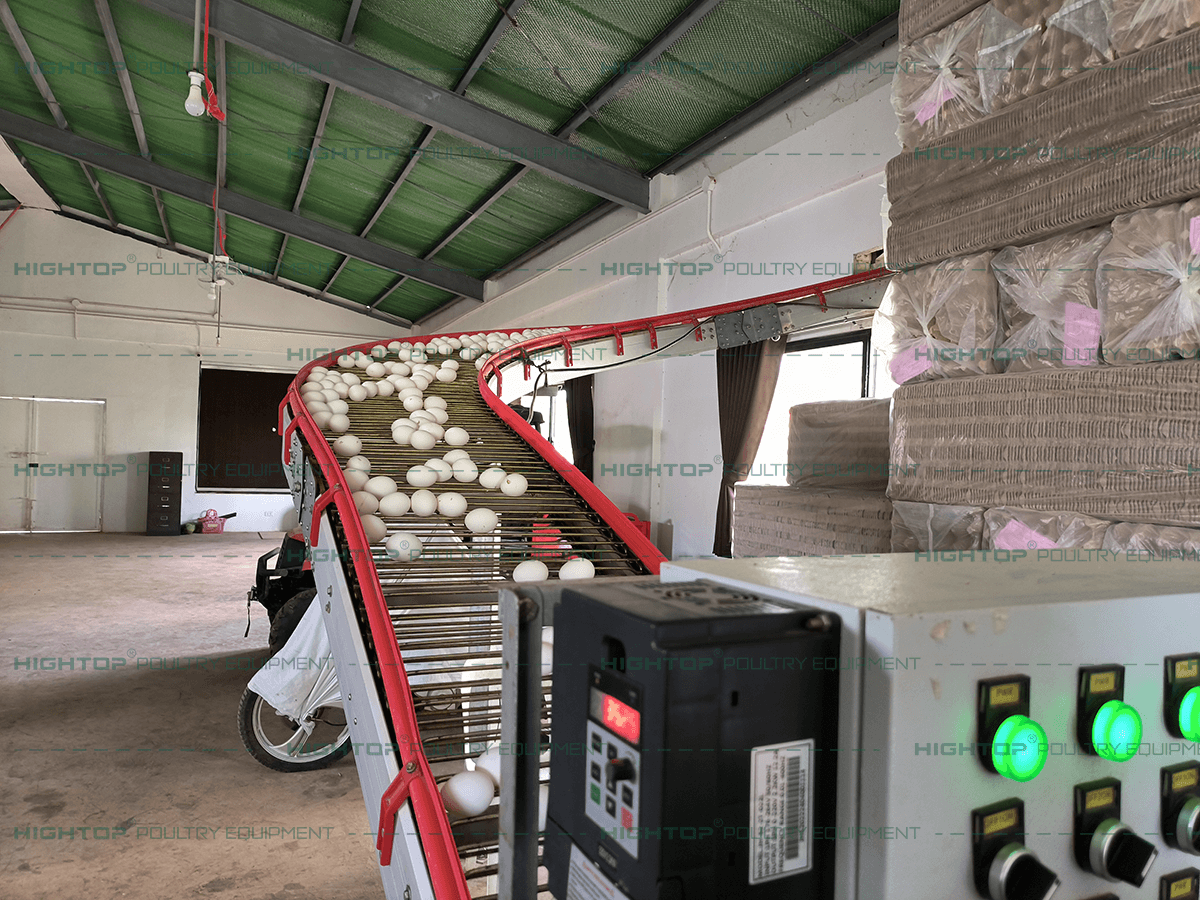
For large commercial farms with several poultry houses, centralized egg collection becomes especially valuable because it turns separate production buildings into one coordinated egg handling system.
It can also be planned in advance to connect with future egg grading, washing, printing, or packing equipment.
Stable Egg Production Requires More Than Egg Collection
Reducing breakage is only one part of improving farm profitability.
The second challenge is maintaining stable laying performance.
Egg production can fluctuate when hens experience:
- Uneven feed intake
- Heat stress
- Excessive ammonia
- Inconsistent lighting
- Poor water supply
- Frequent human disturbance
HIGHTOP’s automatic layer farming system coordinates multiple production systems to create a more stable environment.
Automatic Feeding
Uniform and quantitative feeding helps every hen receive consistent nutrition.
This supports flock uniformity and reduces nutritional problems associated with weak shells and unstable production.
Automatic Manure Removal
Manure belts remove waste regularly instead of allowing it to accumulate beneath cages.
This helps reduce ammonia concentration, humidity, and bacterial pressure inside the poultry house.
Intelligent Environmental Control
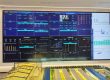
Fans, cooling pads, air inlets, heating equipment, and sensors can be coordinated according to environmental conditions.
Maintaining stable temperature and ventilation reduces heat stress and environmental fluctuations that can affect laying performance.
Intelligent Lighting
Programmable lighting allows farms to maintain consistent lighting duration and intensity according to the production stage.
Stable lighting management is essential for maintaining a consistent laying cycle.
Durable Equipment Protects Long-Term Farm Investment
For commercial poultry farms, equipment should be evaluated based on lifecycle cost rather than purchase price alone.
HIGHTOP cage frames use Q235 carbon steel and hot-dip galvanized treatment to improve corrosion resistance in high-humidity and high-ammonia poultry house environments.
Depending on configuration and operating conditions, HIGHTOP cage systems are designed for long-term commercial use, reducing the need for frequent replacement.
This is particularly important in tropical and humid regions such as Southeast Asia, Africa, Latin America, and parts of the Middle East, where corrosion can significantly shorten the service life of poorly treated poultry equipment.
High-Density H-Type Cages Improve Land Utilization
For large farms, land efficiency is another major consideration.
H-Type stacked cages use vertical space to increase bird capacity without proportionally increasing poultry house footprint.
Different projects can use configurations such as:
- 4 tiers
- 5 tiers
- 6 tiers
- 8 tiers
- Higher customized configurations
The final layout should be determined according to poultry house dimensions, ventilation design, local climate, target capacity, and farm budget.
Higher density does not mean simply adding more cage tiers. Ventilation, manure removal, feeding, egg collection, and maintenance access must all be considered during the design stage.
Automation Can Significantly Reduce Labor Dependence
Automatic feeding, drinking, egg collection, manure removal, and environmental control eliminate many repetitive daily tasks.
Workers can focus instead on:
- Flock inspection
- Equipment monitoring
- Maintenance
- Health management
- Production records
For large commercial farms, this can substantially reduce labor dependence and make farm management more standardized.
More importantly, automated systems reduce variation caused by different workers operating equipment in different ways.
HIGHTOP Provides More Than Individual Equipment
A reliable automatic layer farm requires correct matching between poultry house design and equipment configuration.
HIGHTOP provides integrated poultry farm solutions covering:
- Farm layout planning
- H-Type automatic layer cages
- Automatic feeding and drinking
- Egg collection systems
- Central egg collection lines
- Manure removal
- Environmental control
- Lighting
- Installation guidance
- Commissioning
- Technical training
- After-sales support
For new farms, the entire production system can be planned from the beginning.
For existing farms, HIGHTOP can also design renovation and automation upgrade solutions according to the available poultry house dimensions.
Conclusion: Lower Egg Loss and Build More Stable Layer Production
For large commercial layer farms, reducing egg breakage and stabilizing laying performance are both long-term management objectives.
A well-designed automatic layer farming system helps achieve these goals by controlling the entire production process—from feeding and environmental management to egg collection and manure removal.
The value of automation is not simply replacing workers with machines. It is creating a more standardized, predictable, and controllable production system.
If you are planning a new layer farm or upgrading an existing poultry house, HIGHTOP can design a customized automatic layer farming solution based on your target capacity, poultry house dimensions, local climate, automation requirements, and future expansion plans.
Contact HIGHTOP to discuss your project and receive a customized farm layout and equipment proposal.
Request A Quote
Please contact us or get quote via the contact form below, we’ll get back to you as soon as possible.