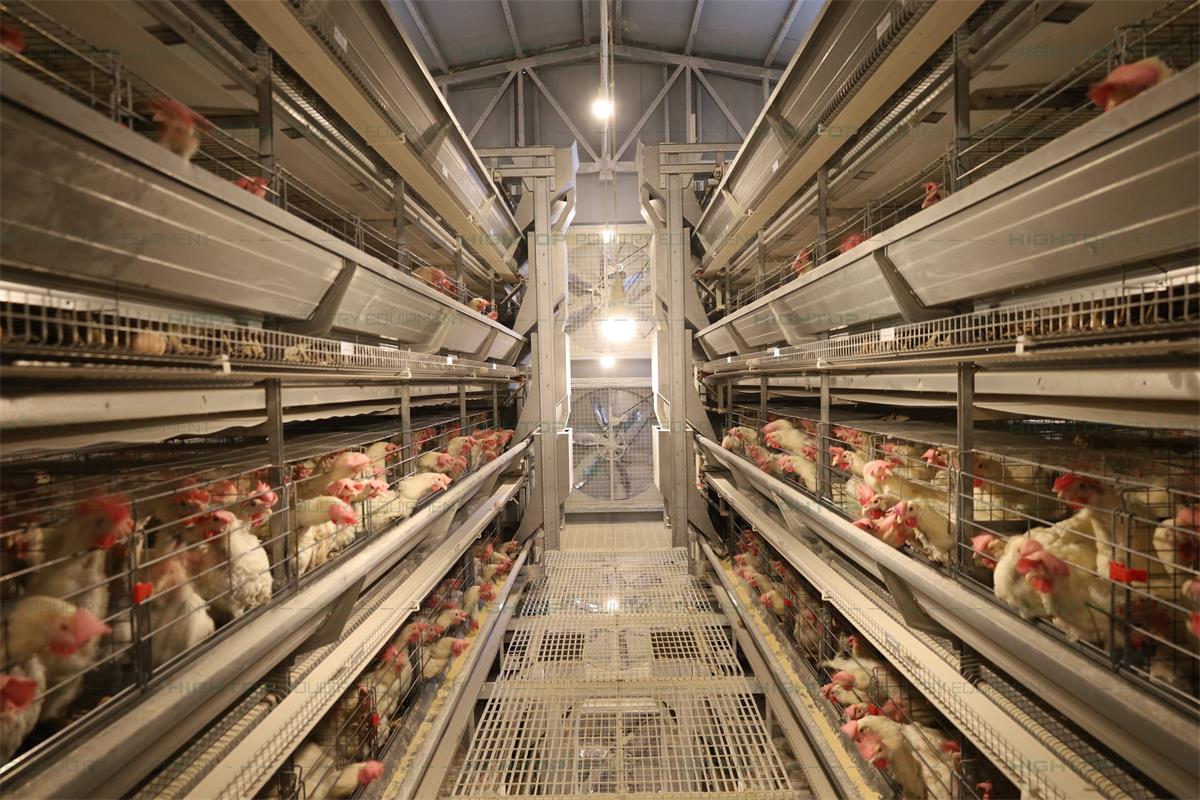
In today’s commercial poultry industry, labor shortages and rising wages have become major challenges for large-scale egg farms. Traditional layer farming relies heavily on manual labor. A poultry house with 50,000 laying hens typically requires 8–12 workers to handle feeding, egg collection, manure removal, and environmental management, resulting in high operating costs and inconsistent production efficiency.
With the rapid development of automated poultry equipment, fully automated layer cage systems have completely transformed farm management. Today, a modern 50,000-layer poultry house can be efficiently operated by only two workers, significantly reducing labor costs while improving productivity, flock health, and management accuracy.
This article explains how automated cage farming makes this possible.
Why Can Two Workers Manage 50,000 Layers?
The key lies in full-process automation. Instead of relying on manual labor for repetitive daily tasks, automated layer farms integrate intelligent equipment that performs nearly every routine operation.
A complete automated cage system typically includes:
- Automatic feeding system
- Automatic drinking system
- Automatic egg collection system
- Automatic manure removal system
- Intelligent environmental control
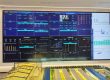
- Centralized monitoring and management
With these systems working together, workers focus mainly on inspections, preventive maintenance, and emergency response rather than physically demanding daily tasks.
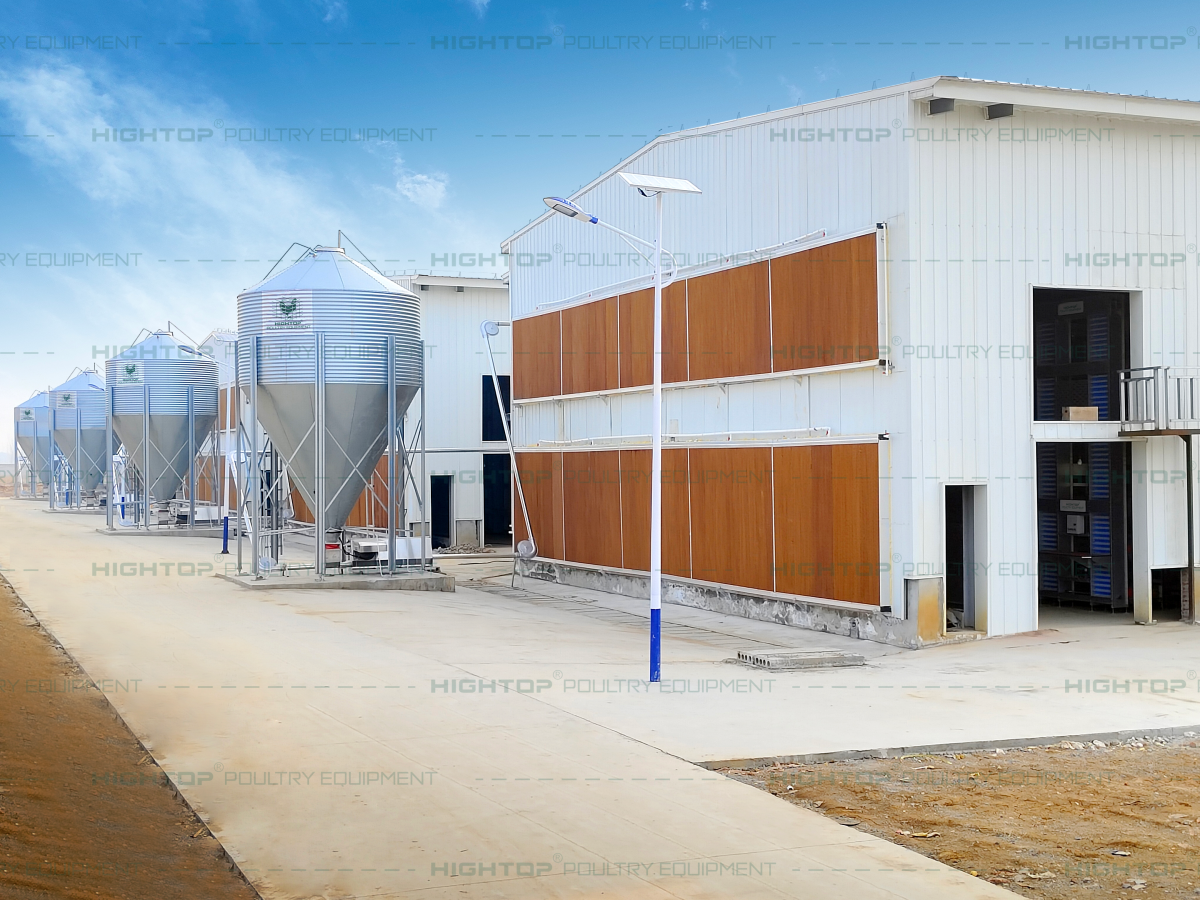
Automatic Feeding & Drinking: Eliminating Daily Manual Feeding
Automatic Feeding
Traditional farms require workers to transport feed, distribute it manually, and adjust feeding quantities throughout the production cycle. This process is labor-intensive and often results in uneven feed distribution and unnecessary feed waste.
Modern automated feeding systems use chain or auger conveyors to deliver feed throughout the entire poultry house automatically.
Benefits include:
- Timed and scheduled feeding
- Precise feed quantity control
- Uniform feed distribution
- Reduced feed waste
- Consistent nutrition for every hen
The system can automatically adjust feeding frequency and feed quantity according to:
- Bird age
- Production stage
- Seasonal changes
This significantly improves feed utilization while reducing labor requirements.
Automatic Drinking
The automatic drinking system provides:
- Continuous clean water supply
- Constant water pressure
- Automatic water circulation
- Stable water quality
Manual water filling is eliminated, and the automated system greatly reduces routine maintenance while ensuring birds always have access to fresh drinking water.
Result: Automatic feeding and drinking alone can reduce more than 40% of the daily labor workload.
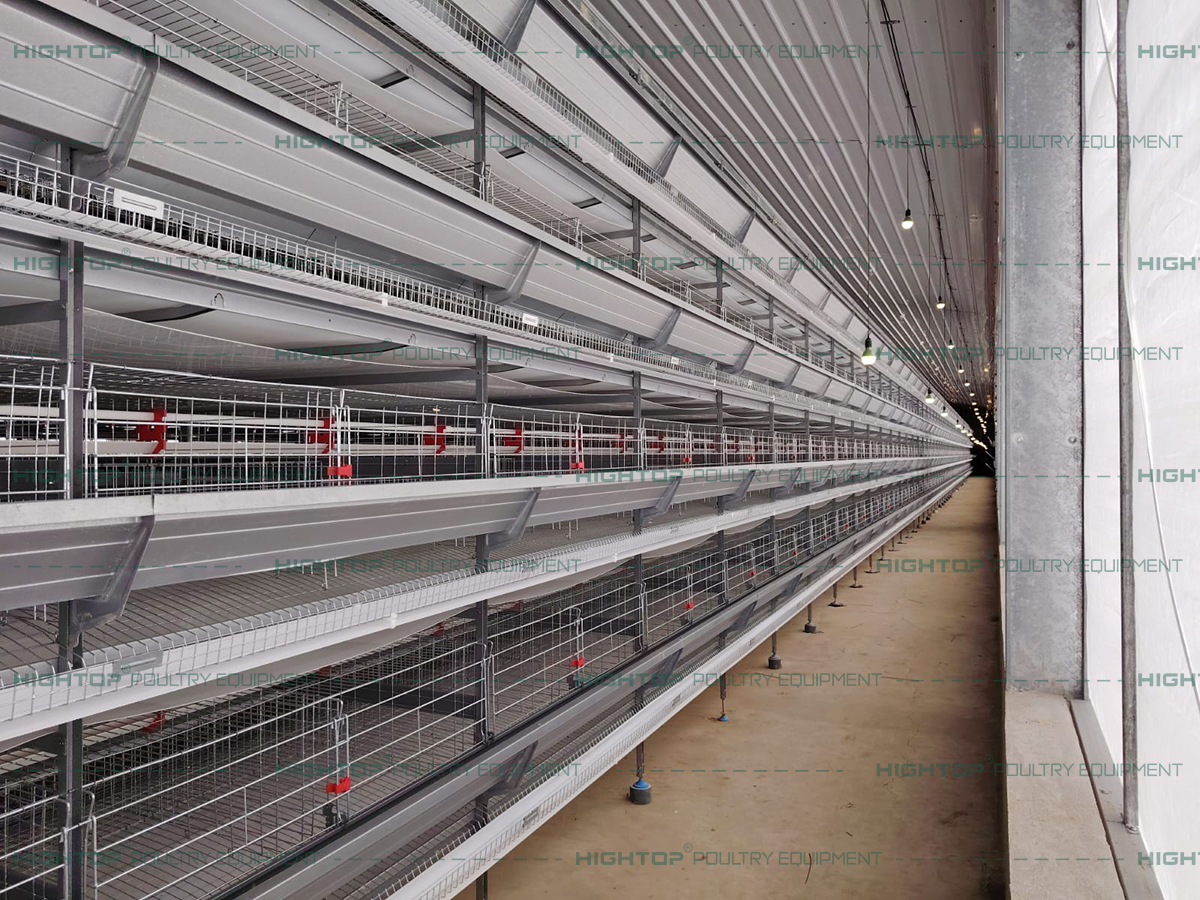
Automatic Egg Collection & Manure Removal
Automatic Egg Collection
Egg collection is one of the most labor-intensive operations in traditional layer farming.
For a 50,000-bird farm, manual collection requires workers to repeatedly walk through every cage row each day, increasing labor costs and the risk of egg damage.
The automated egg collection system features:
- Soft conveyor belts
- Centralized egg transportation
- Scheduled collection
- Stable conveying speed
Advantages include:
- Egg breakage rate below 0.5%
- Minimal labor requirements
- Faster collection
- Improved egg cleanliness
- Consistent product quality
Workers only need to sort and package eggs after collection.
Automatic Manure Removal
Traditional manure cleaning consumes significant labor and creates sanitation challenges.
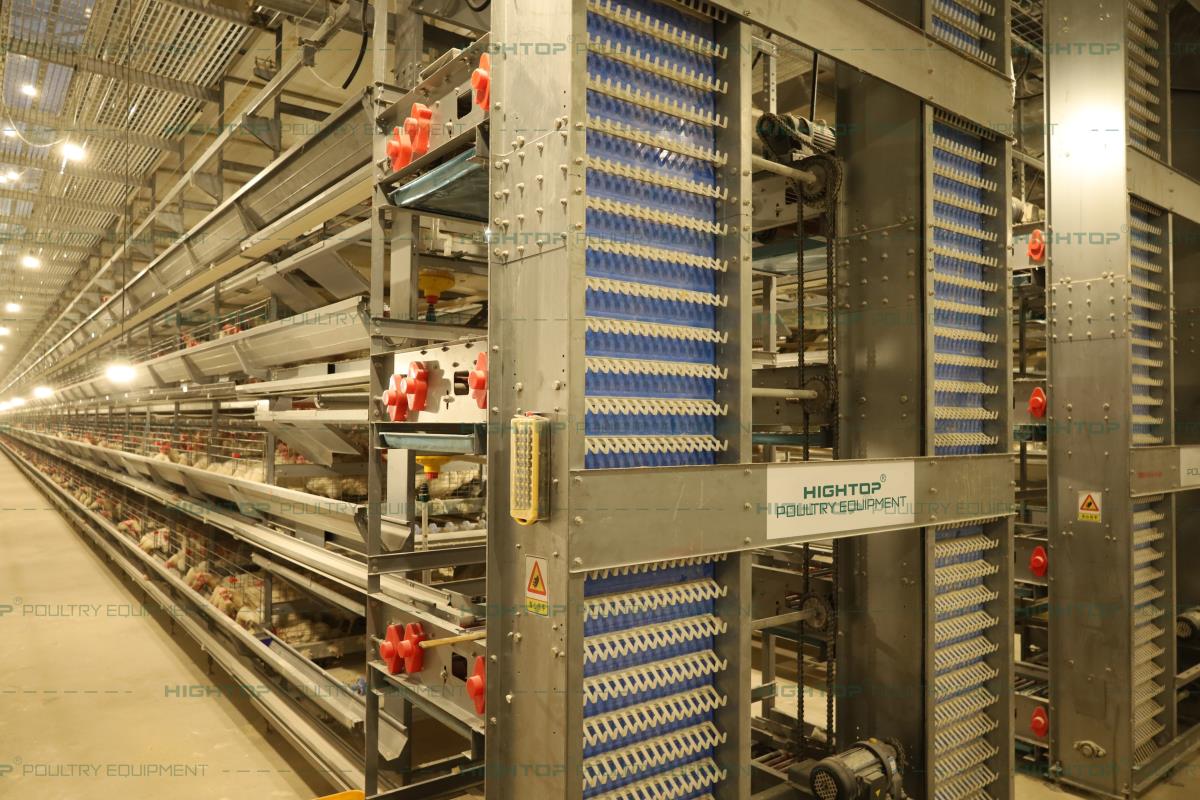
Automatic manure belts remove manure multiple times per day according to preset schedules.
Benefits include:
- Reduced ammonia concentration
- Cleaner poultry houses
- Lower disease pressure
- Improved bird welfare
- Elimination of manual manure removal
This system not only saves labor but also creates a healthier production environment.
Intelligent Environmental Control
Environmental conditions directly affect:
- Egg production
- Feed conversion
- Bird health
- Mortality
- Egg quality
Traditional farms depend on workers to manually adjust fans, curtains, cooling pads, and heaters throughout the day.
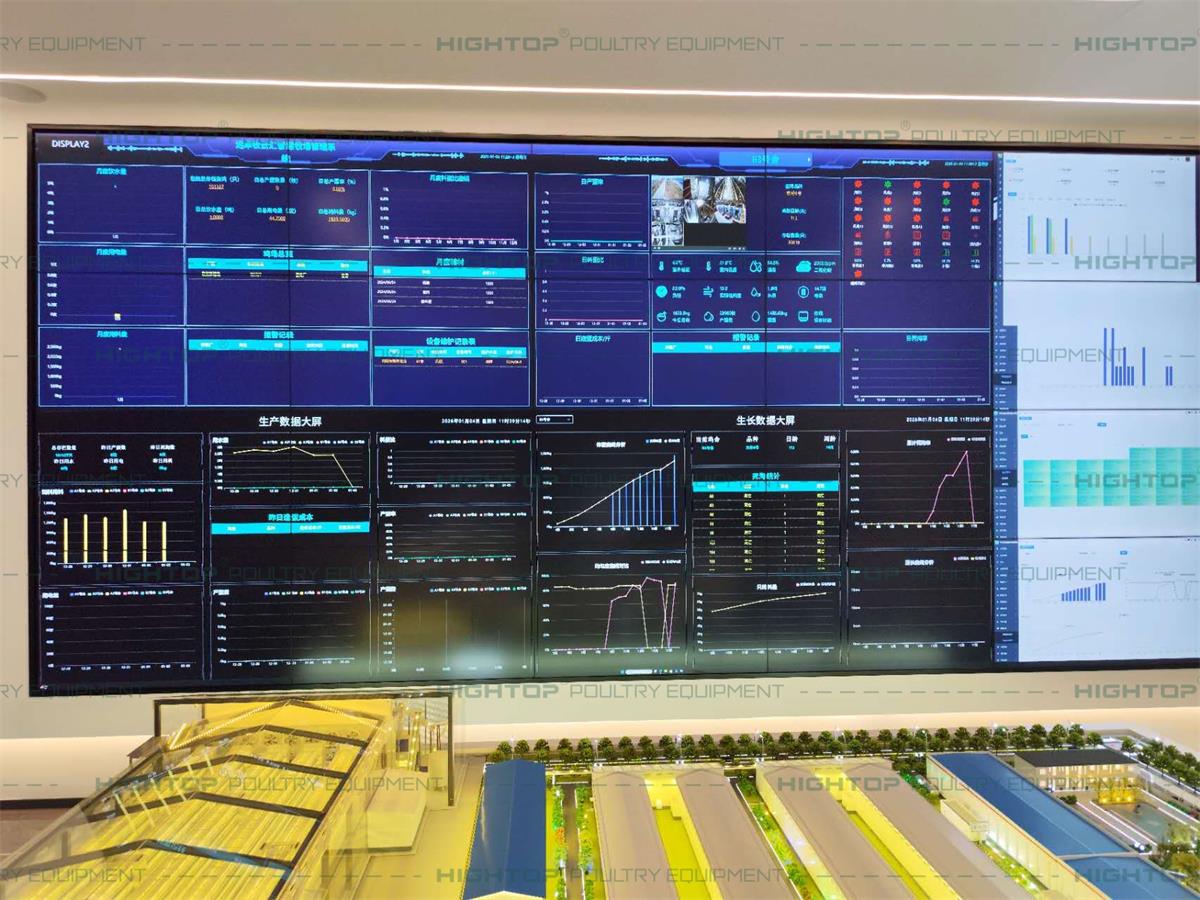
Modern environmental control systems use high-precision sensors to continuously monitor:
- Temperature
- Humidity
- Ammonia concentration
- Light intensity
Based on preset parameters, the controller automatically operates:
- Ventilation fans
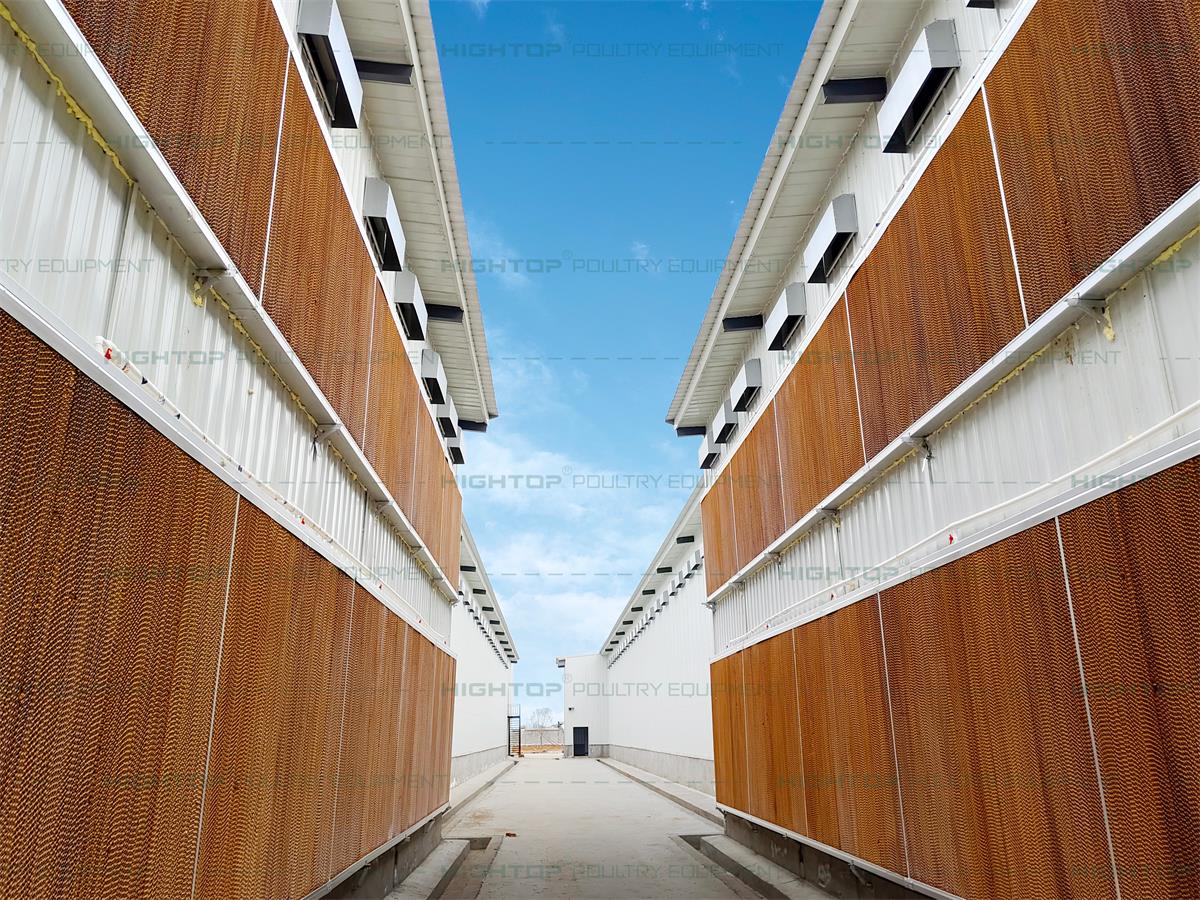
- Cooling pads
- Air inlets
- Heating equipment
- Lighting systems
This keeps the poultry house within the optimal production environment around the clock while minimizing human intervention.
What Do the Two Workers Actually Do?
Many farmers wonder whether only two workers can realistically manage a 50,000-layer farm.
The answer is yes—because their responsibilities are no longer repetitive physical labor.
Worker 1: Flock Management
Primary responsibilities include:
- Inspecting bird health
- Monitoring feeding behavior
- Checking egg production
- Recording production data
- Identifying abnormal birds
Worker 2: Equipment Inspection
Primary responsibilities include:
- Checking feeding equipment
- Inspecting egg collection lines
- Monitoring manure removal systems
- Inspecting environmental control equipment
- Performing routine maintenance
- Handling minor equipment issues
Since automated systems perform nearly all repetitive work, daily management becomes predictable, organized, and highly efficient.
Flexible Automation for Different Farm Budgets
Not every farm needs to become fully automated immediately.
HIGHTOP provides both:
Semi-Automatic Solutions
Suitable for farms with limited initial investment.
Customers can start with:
- Automatic feeding
- Automatic drinking
Later they can upgrade by adding:
- Automatic egg collection
- Intelligent environmental control
- Additional automation modules
Fully Automatic Solutions
Ideal for newly built commercial farms.
A complete automated system enables:
- Minimal labor requirements
- Higher production efficiency
- Lower operating costs
- Better production consistency
Whether building a new farm or upgrading an existing one, HIGHTOP offers customized solutions that support efficient two-worker management.
Benefits of Managing 50,000 Layers with Only Two Workers
Compared with traditional poultry farming, automated cage systems provide significant advantages:
- Lower labor costs by reducing staffing requirements
- Higher feed efficiency through precise feeding
- Improved egg quality with gentle automatic collection
- Cleaner poultry houses through scheduled manure removal
- Better flock health with optimized environmental control
- Reduced management errors through intelligent automation
- Higher production consistency with data-driven operations
- Scalable solutions for farms of different sizes
Conclusion
Managing 50,000 laying hens with only two workers is no longer a marketing concept—it is a proven reality achieved through modern automation.
By integrating automatic feeding, drinking, egg collection, manure removal, and intelligent environmental control into one coordinated system, automated cage farming dramatically reduces labor dependence while improving production efficiency, flock health, and overall profitability.
As labor costs continue to rise worldwide, investing in a high-quality automated layer cage system has become one of the most effective ways for commercial poultry farms to reduce operating costs, improve efficiency, and remain competitive in today’s poultry industry.
Request A Quote
Please contact us or get quote via the contact form below, we’ll get back to you as soon as possible.