Introduction: A Decision Many Poultry Farmers Face, but Few Act On
Every poultry farmer reaches a crossroads.
You may already have a working farm—perhaps 40,000 birds in a free-range or traditional setup. The bills get paid and the business runs. But deep down, you know something has to change.
Land is becoming more expensive. Labor is harder to find. Disease control becomes more challenging with every new flock. Feed conversion ratios start to rise, and the gap between what you could be producing and what you are producing keeps widening.
This is exactly where one Philippine broiler farmer found himself in 2024. He had a single free-range poultry house with 40,000 birds—a respectable operation by any measure. However, he wanted to build something better: a new, modern poultry house for 100,000 broilers.
He knew he needed to upgrade, but he also understood the risks. Change is expensive. Change is uncertain. Choosing the wrong equipment partner can set a poultry farm back years.
His story is not unique. But the way he made his decision—and the partner he chose—might change the way you think about your next investment.
The First Encounter at Farmer Summit 2024
It started simply enough.
At the Farmer Summit in 2024, our team met a farmer who was looking for a better production method. He had heard about our pull-out slat harvesting cages and wanted to learn more.
Like many farmers at that stage, he was still gathering information—collecting quotations, comparing specifications, and building a shortlist of potential suppliers.
We provided him with a detailed quotation and answered his questions about cage design, stocking density, and ventilation compatibility. He added HIGHTOP to his supplier list. Nothing more, nothing less.
What we did not know at the time was that he was watching closely—not only our products, but also how we responded to his questions, handled his concerns, and whether we treated him as a transaction or a long-term partner.
The Turning Point: Visiting a Working Broiler Cage Project in the Philippines
In July 2025, everything changed.
We invited the farmer to visit one of our existing pull-out slat harvesting cage projects in the Philippines.
It was not a showroom or a demonstration video. It was a real poultry farm where HIGHTOP equipment had already been installed and was operating every day.
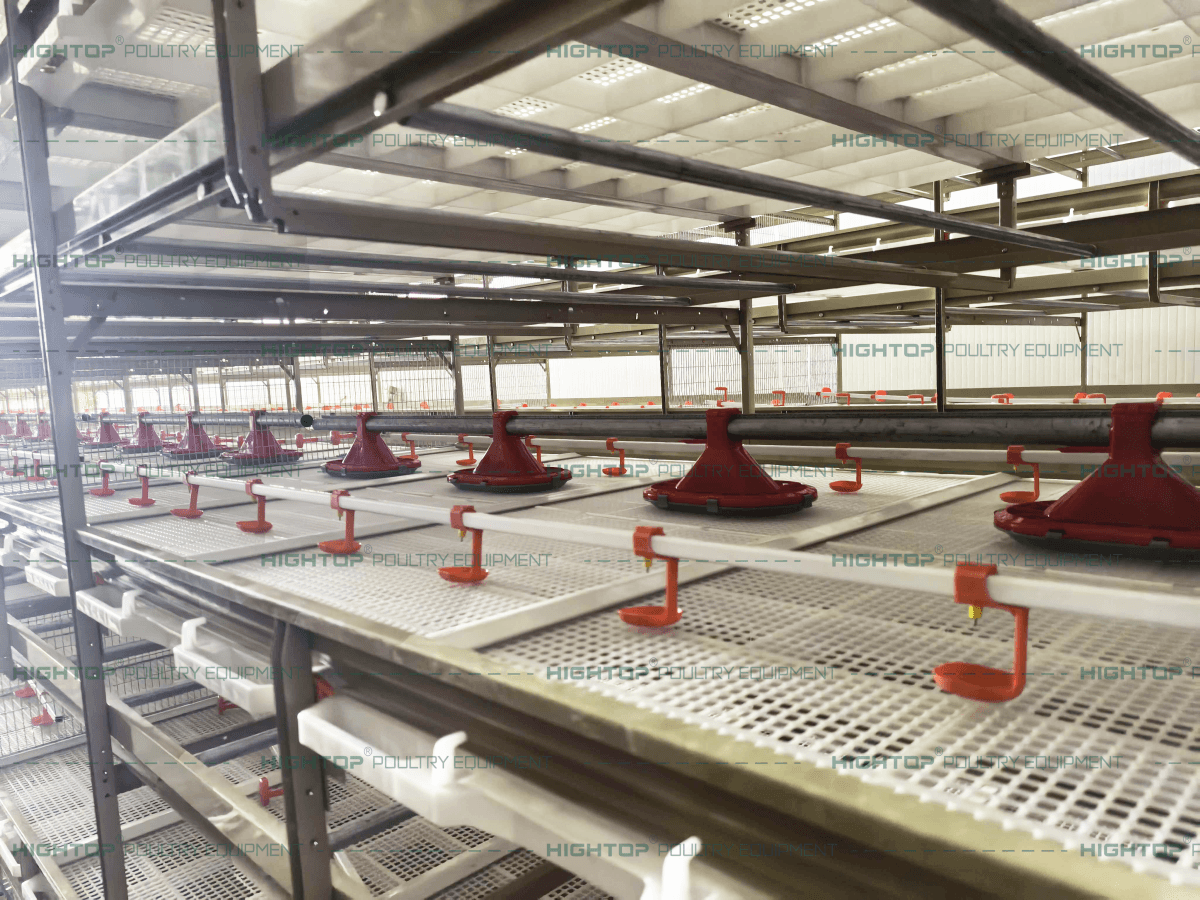
He walked through the poultry house, observed the birds, spoke with the farm team, and inspected how the cages performed under tropical conditions. He also examined the automatic feeding and drinking systems and saw how the manure removal equipment helped keep the poultry house clean.
What Impressed the Farmer Most
Several details stood out during the visit:
- The structural stability of the cages
- The smooth operation of the retractable plates
- The convenience of daily farm management
- The cleanliness of the poultry house
- The overall manufacturing quality of the equipment
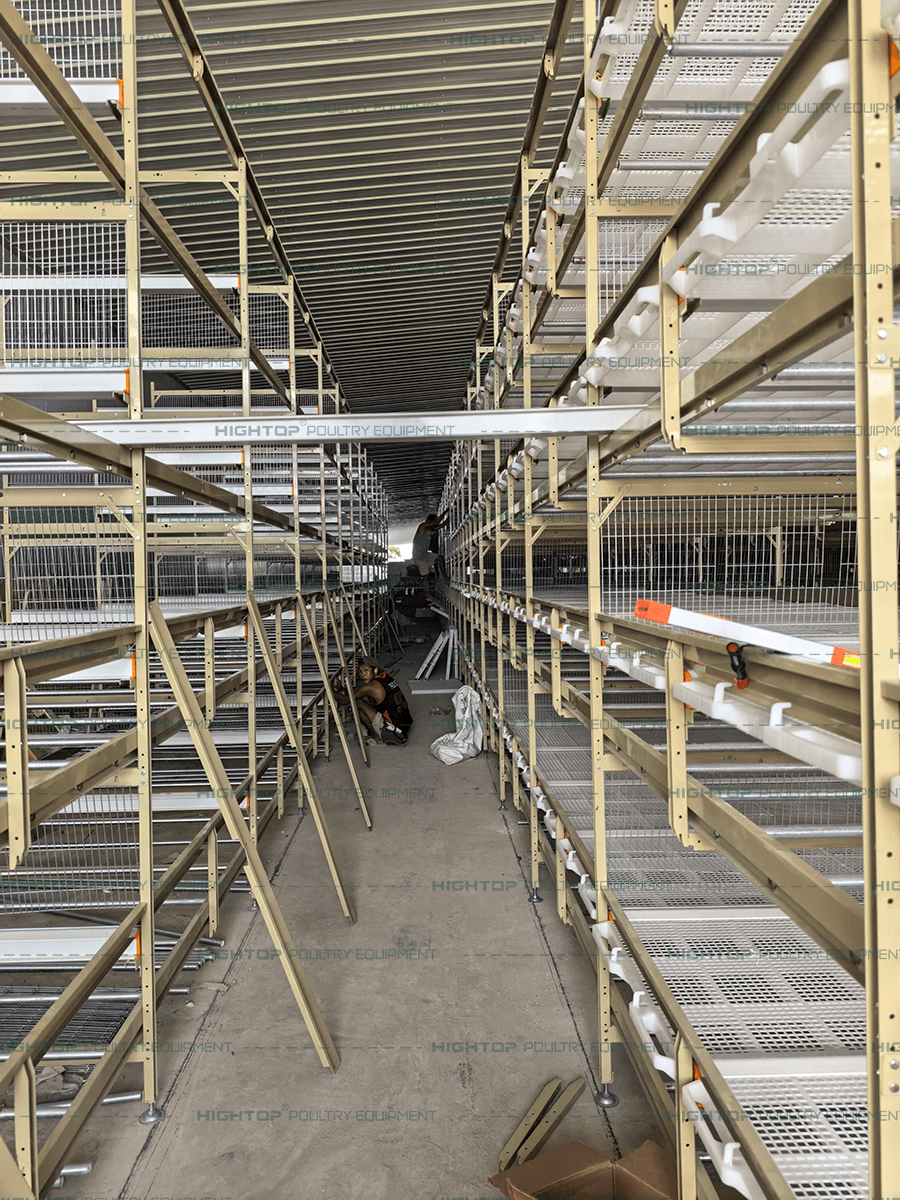
The farmer also noticed an upgraded product in our promotional videos and project images: powder-coated pull-out slat harvesting cages.
The difference was immediately visible. The coating gave the cages a cleaner and more professional finish. Our sales manager also explained the improved corrosion resistance, easier cleaning process, and smoother surface of the coated components.
That was the moment his interest shifted from considering the equipment to wanting it for his own farm.
The Second Step: Visiting the HIGHTOP Factory in China
By October 2025, the relationship had moved beyond casual interest. The farmer travelled to China to visit our manufacturing facility in person.
This was not a quick factory tour.
He spent time observing our production lines, steel processing procedures, powder-coating system, and quality control process. He also met our engineering team and discussed the specific operating conditions of his farm, including typhoon risks and voltage fluctuations in his region.
As a serious buyer, he asked practical questions:
- “How do you ensure consistent coating thickness across all cage components?”
- “What happens if a part is damaged during shipping?”
- “Can your cages withstand strong winds in an open coastal area?”
- “How long will this equipment last in a tropical climate?”
Our answers were supported by production information, experience from existing Philippine projects, and HIGHTOP’s record as a poultry equipment manufacturer serving international farms.
By the time he left the factory, he had made his decision.
The Order: A Complete Automated Poultry House for 100,000 Broilers
In January 2026, the order was confirmed.
The complete poultry farming solution included:
- A steel structure poultry house designed for 100,000 broilers
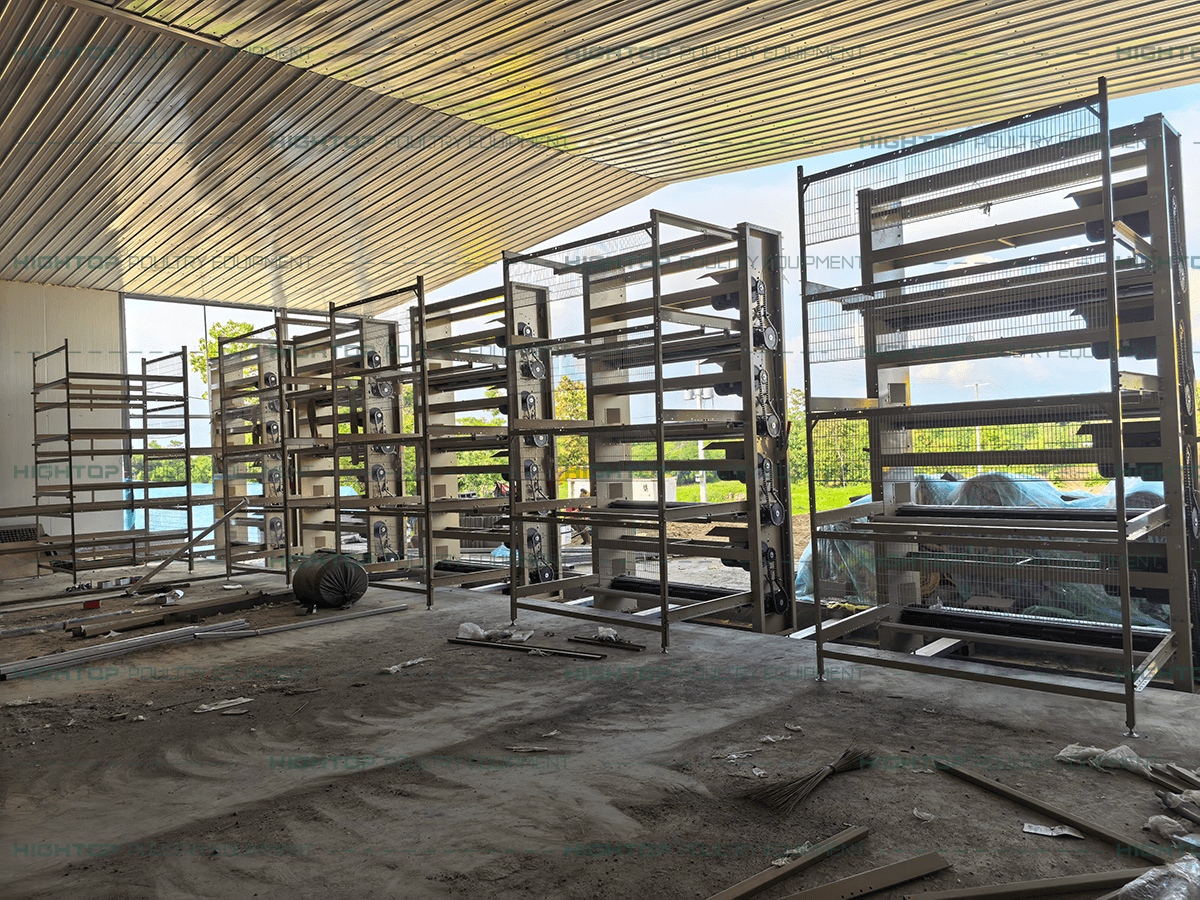
- A 4-tier, 5-row system of powder-coated pull-out slat harvesting cages
- An environmental control system for precise ventilation and temperature management
- Installation guidance from the HIGHTOP engineering team
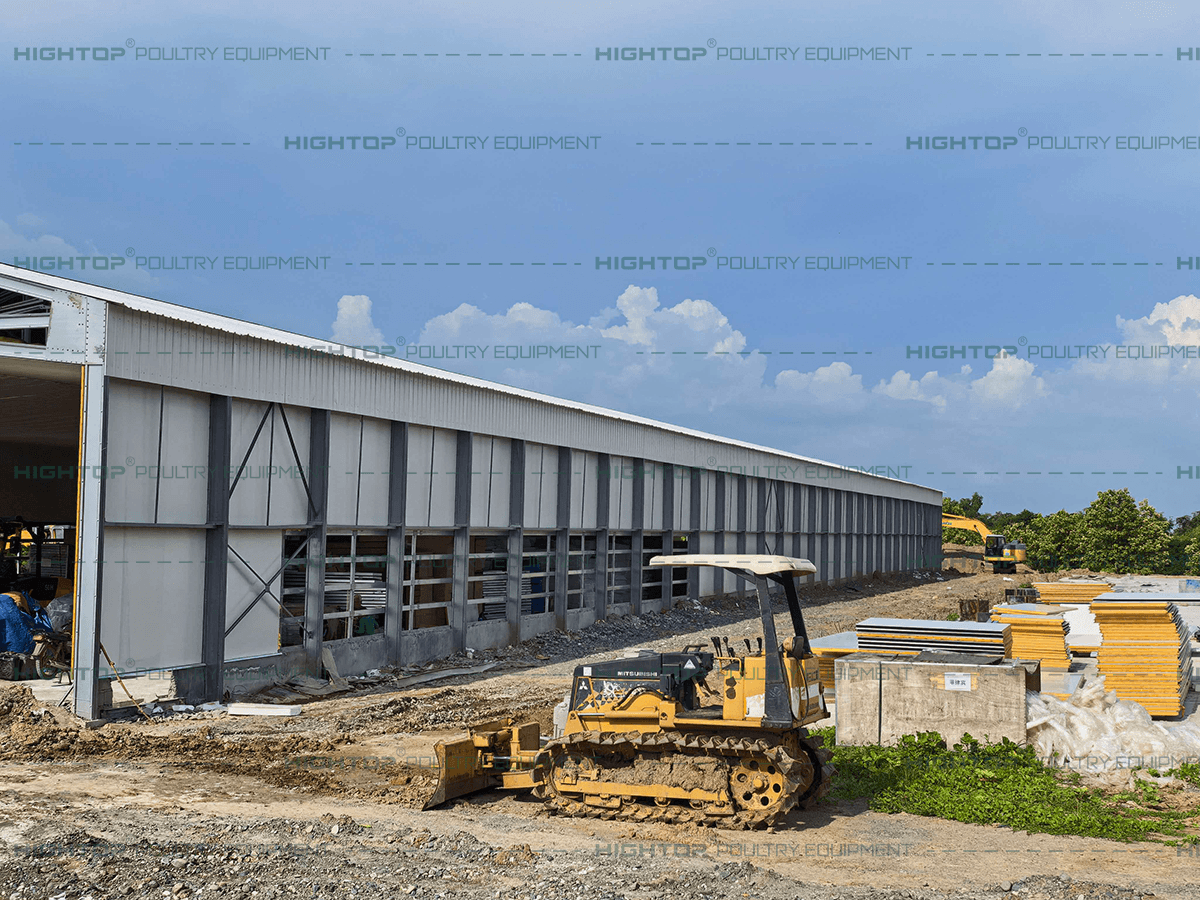
Three upgrades made this project especially important: powder-coated cage components, a steel structure poultry house designed for local conditions, and EC fans selected for energy efficiency and voltage adaptability.
Powder-Coated Broiler Cages: More Than an Appearance Upgrade
Many poultry farmers ask the same question: Is powder coating worth the additional investment?
Our Philippine customer asked this question as well—until he inspected the equipment in person.
Improved Corrosion Resistance
Tropical poultry farms often operate under high temperatures and high humidity. Under these conditions, corrosion protection directly affects the service life and maintenance requirements of cage equipment.
Standard galvanized cages may begin to show signs of corrosion after 5–7 years. HIGHTOP’s powder-coated cages are designed to protect the steel substrate for up to 25 years, depending on operating conditions and maintenance.
This can reduce the need for major cage replacement and lower long-term equipment costs.
Smoother Contact Surfaces
Powder coating creates a smoother surface and covers exposed or uneven areas of the steel components. This helps reduce sharp contact points and the risk of bird injuries during rearing and harvesting.
Easier Cleaning and Disinfection
The smooth, non-porous surface is easier to wash and disinfect between production cycles. It also reduces the number of irregular areas where dirt and organic material can accumulate.
For broiler farms operating multiple flocks each year, faster and more thorough cleaning supports better biosecurity management.
A Cleaner, More Professional Poultry House
The coated finish gives the cage system a cleaner and more uniform appearance. This is valuable when the farm is inspected by customers, business partners, veterinarians, or local authorities.
For this customer, the decision was straightforward: invest more at the beginning to reduce maintenance and replacement pressure later.
Steel Structure Poultry House Designed for Tropical Conditions
A broiler cage system can only perform properly when the poultry house provides a stable operating environment.
The customer needed a building capable of handling the main challenges of the Philippine climate: high temperatures, heavy rainfall, high humidity, and strong typhoons.
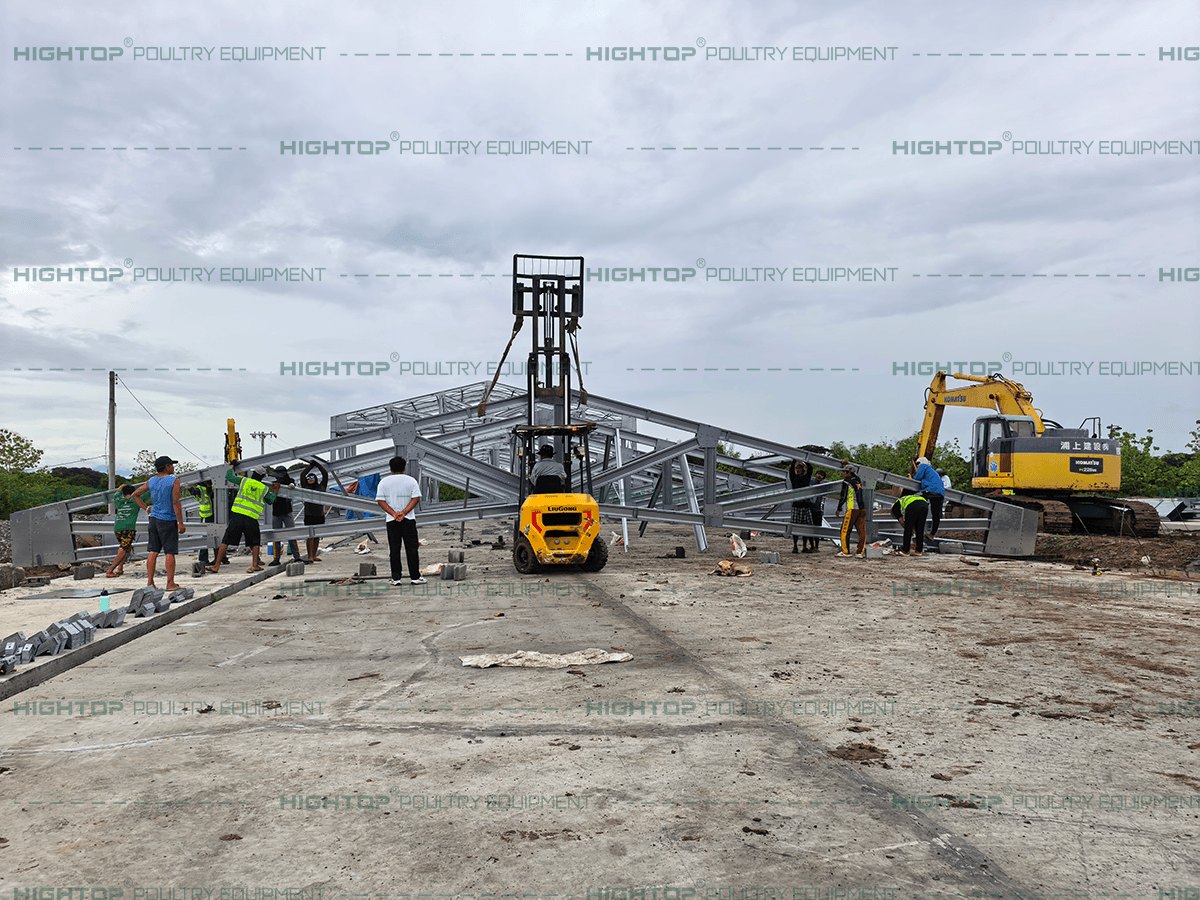
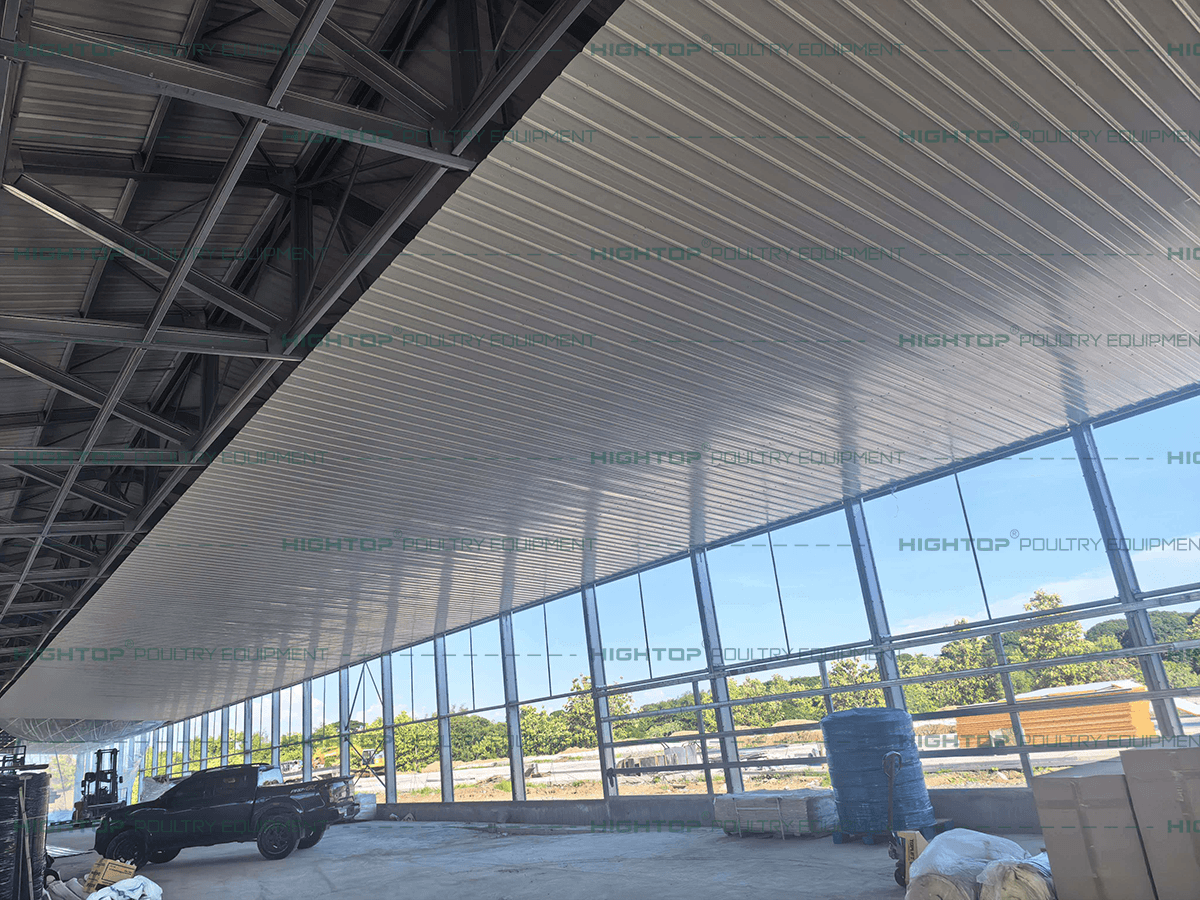
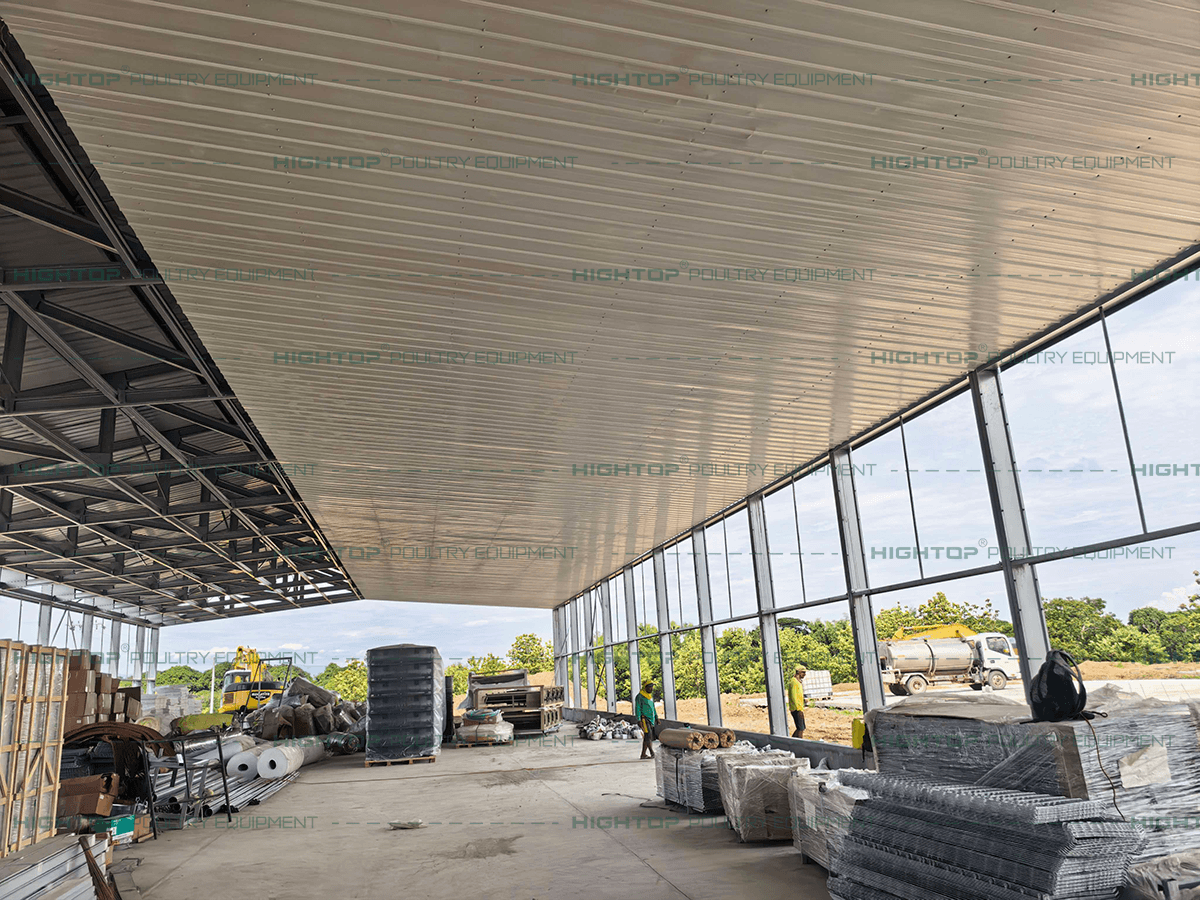
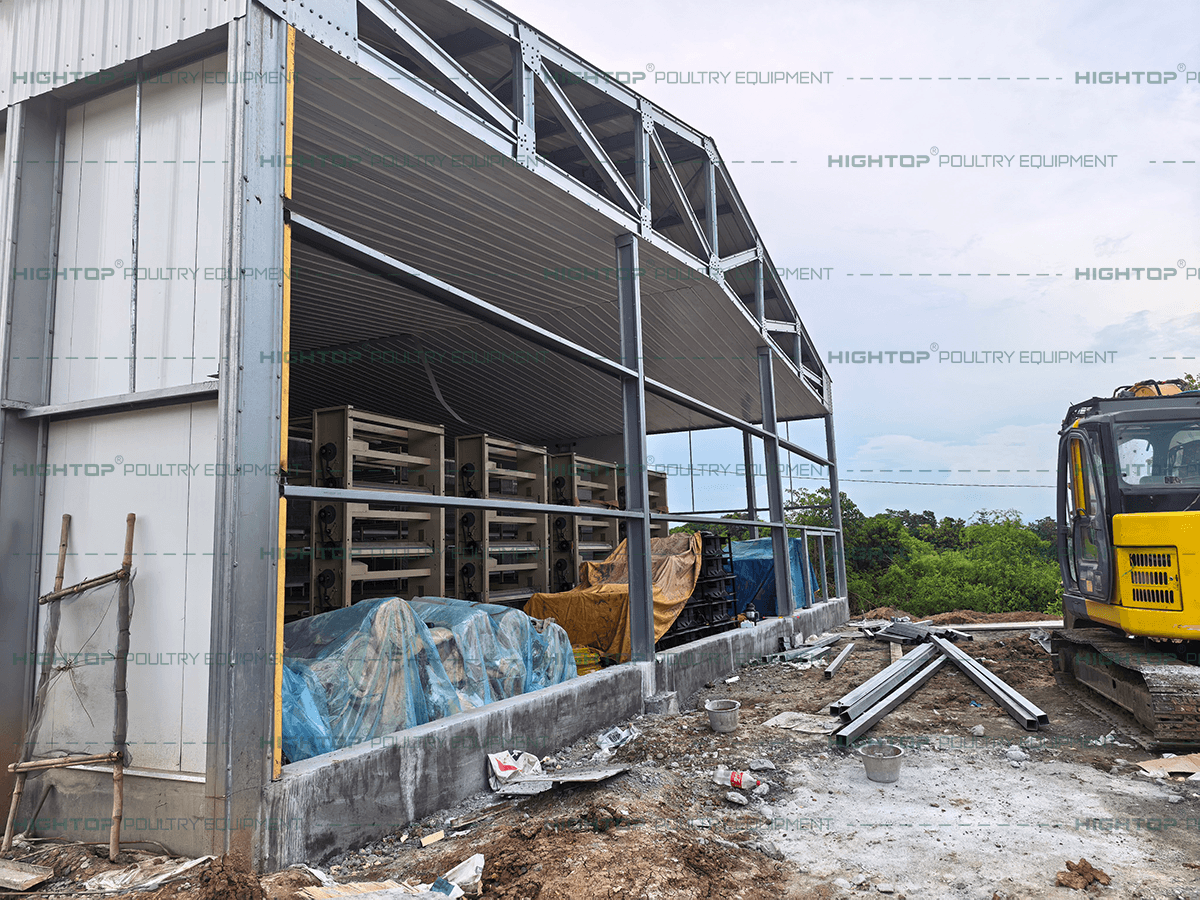
HIGHTOP’s solution included a K-section steel structure with concrete-reinforced columns to improve wind resistance.
Thermal Insulation
The building envelope helps limit external heat transfer and maintain more stable conditions inside the poultry house. Better insulation can reduce heat stress and lower the load placed on the ventilation and cooling systems.
Smooth Interior Surfaces
The internal walls are designed without unnecessary ridges or deep gaps where dust, feathers, manure, and bacteria can accumulate.
Smoother surfaces make washing and disinfection faster and more effective between flocks.
Corrosion-Resistant Materials
Structural components are treated for operation in humid and corrosive farm environments. This is especially important in coastal or tropical regions where moisture can accelerate metal deterioration.
Structural Durability
The poultry house was designed according to the customer’s site conditions, bird capacity, equipment layout, and long-term production goals. The structural solution considers risks such as strong winds, typhoons, earthquakes, and continuous agricultural use.
This was not a standard building selected from a catalogue. It was designed specifically for the farm and the equipment installed inside it.
EC Fans for Energy-Efficient and Stable Ventilation
Ventilation is one of the most important systems in a modern broiler house.
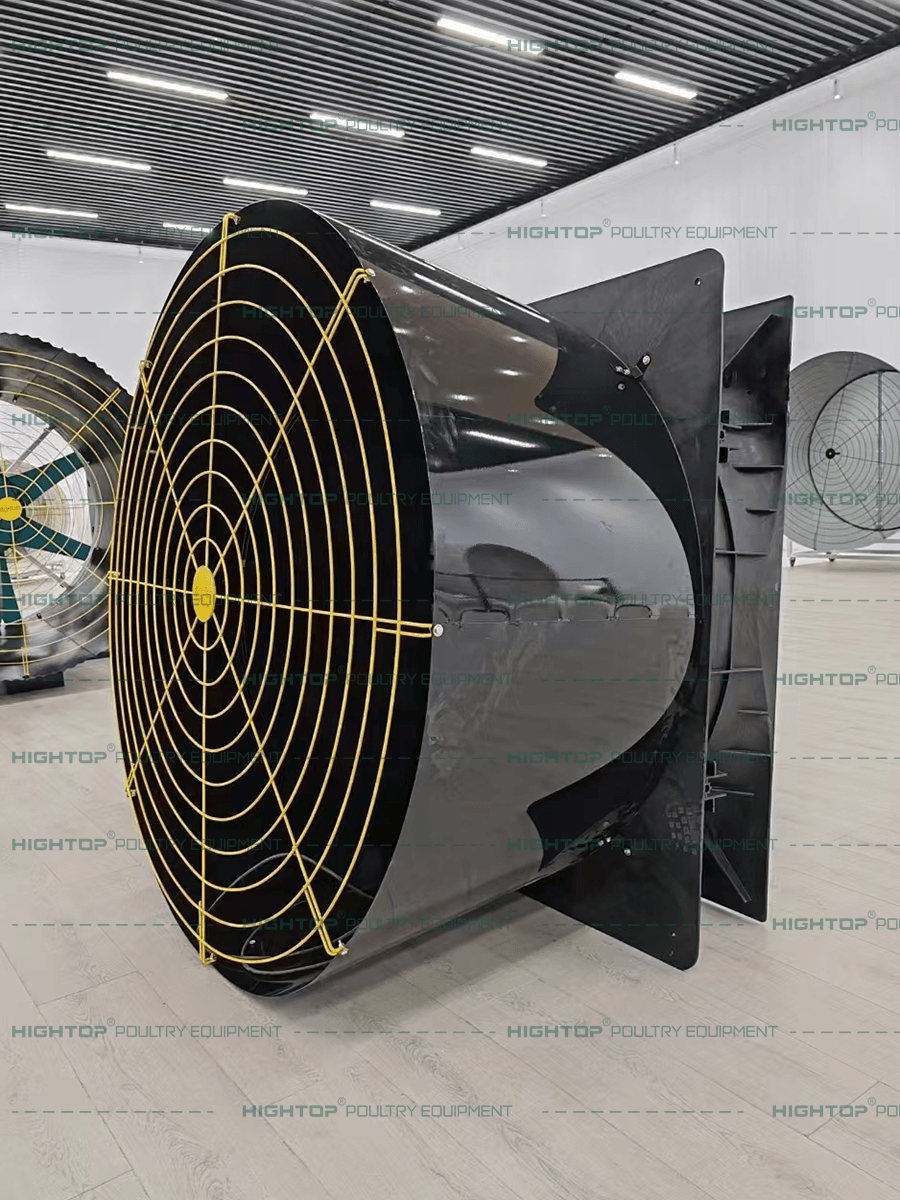
In many parts of the Philippines and other developing poultry markets, unstable voltage, brownouts, and electrical surges are practical operating concerns. For this reason, the customer selected EC—or electronically commutated—fans instead of conventional AC fans.
Energy Savings
EC motors can provide higher operating efficiency than conventional fan motors. Depending on the operating conditions and ventilation program, they can reduce electricity consumption by up to 30%.
For a poultry house with continuous ventilation requirements, these savings can become significant over the service life of the farm.
Wide Voltage Tolerance
EC fans are designed to operate across a broader voltage range, helping the ventilation system maintain more consistent performance when the electrical supply fluctuates.
Precise Speed Control
Variable-speed operation allows the farm to adjust airflow according to bird age, stocking density, outside temperature, humidity, and internal environmental conditions.
Instead of operating only at full speed or switching off completely, the fans can respond more precisely to actual ventilation demand.
Lower Operating Noise
Quieter operation can reduce unnecessary disturbance to the birds and provide better working conditions for farm personnel.
Reduced Maintenance Requirements
EC fans use integrated electronic controls and require fewer conventional control components. This can reduce system complexity, downtime, and maintenance requirements.
In an area where unstable electricity can threaten poultry house ventilation, EC fans provide the farm with greater operating flexibility.
Installation Support: Three Engineers Working On-Site
One of the biggest concerns when purchasing poultry equipment from overseas is installation support.
Farmers want to know what will happen if a problem occurs during construction, equipment installation, commissioning, or coordination with the local team.
For this project, HIGHTOP assigned three experienced engineers:
- One engineer dedicated to the steel structure installation
- One engineer dedicated to the broiler cage system installation
- One engineer responsible for full-time coordination and cross-system technical support
This was not a project where the supplier simply delivered equipment and sent an installation manual.
HIGHTOP engineers worked alongside the local construction and installation teams. They provided training, checked installation quality, solved problems on-site, and ensured that the steel structure, cages, and environmental control equipment were installed according to the project design.
At the time of writing, the steel structure was nearly complete, and cage installation was progressing according to schedule.
The progress demonstrates the value of combining experienced technical supervision with a committed local installation team.
What This Broiler Project Means for Other Poultry Farmers
If you are operating a traditional or free-range broiler farm, this customer’s concerns may sound familiar.
Your current capacity may be 40,000 birds, or it may be larger or smaller. Your main challenge could be limited land, high temperatures, humidity, rising labor costs, biosecurity, unreliable electricity, or uncertainty about choosing the right equipment.
The main lessons from this project are clear:
- You do not have to plan the transition alone. HIGHTOP can evaluate your farm conditions, target capacity, climate, and level of automation.
- You do not have to rely only on brochures. Customers can inspect real projects, observe equipment in operation, and speak with existing farm teams.
- You do not have to accept a standard configuration. Options such as powder-coated cages, EC fans, and customized steel structures can address specific operating risks.
- You do not have to manage installation without technical support. HIGHTOP engineers can provide on-site guidance and work with the customer’s local installation team.
For this Philippine farmer, the final decision was based on more than a quotation. It came from visiting an operating farm, inspecting the equipment, seeing the manufacturing process, discussing local risks with engineers, and confirming that technical support would continue through installation.
Take the Next Step Toward Automated Broiler Farming
We invite other poultry farmers to take the same practical approach before making their next investment.
- Visit one of our operating poultry projects in the Philippines, Southeast Asia, or another available market.
- Visit the HIGHTOP factory in China to see how the equipment is manufactured, coated, inspected, and prepared for delivery.
- Speak with our engineers about your site conditions, bird capacity, climate, electricity supply, and production goals.
Whether you are planning a new poultry house, upgrading an existing farm, or comparing different broiler production systems, HIGHTOP can help you evaluate the available options.
Contact HIGHTOP to schedule a project visit, request a quotation, or discuss your farm with one of our project engineers.
Your next poultry farm requires more than equipment. It requires a partner capable of supporting the project from design and manufacturing to installation and operation.
Request A Quote
Please contact us or get quote via the contact form below, we’ll get back to you as soon as possible.