How to Manage Broiler House Ventilation During Large Day–Night Temperature Changes
Why Spring Ventilation Is So Critical for Broiler Farms
For white-feather broiler farmers, spring is often one of the most difficult seasons to manage.
During the day, outside temperatures may reach 25–26°C (77–79°F) with very dry air at around 30% relative humidity.
At night, temperatures can quickly drop to 10°C (50°F) while humidity rises to 75% or higher.
This large day–night fluctuation creates serious challenges inside a broiler house.
For young broilers, sudden environmental changes can easily cause:
- Respiratory stress
- Reduced feed intake
- Poor weight gain
- Uneven flock growth
- Increased disease risk
Many farmers simply increase or decrease fan operation based on temperature.
But for broilers, temperature alone does not determine comfort.
Humidity changes strongly affect how warm or cold birds actually feel.
Good ventilation management is not just controlling air temperature. It is about balancing:
- Temperature
- Humidity
- Air speed
- Heat retention
The goal is simple:
Keep broilers feeling stable and comfortable from morning to night, even when outside weather changes sharply.
A Real Broiler Farm Comparison Test
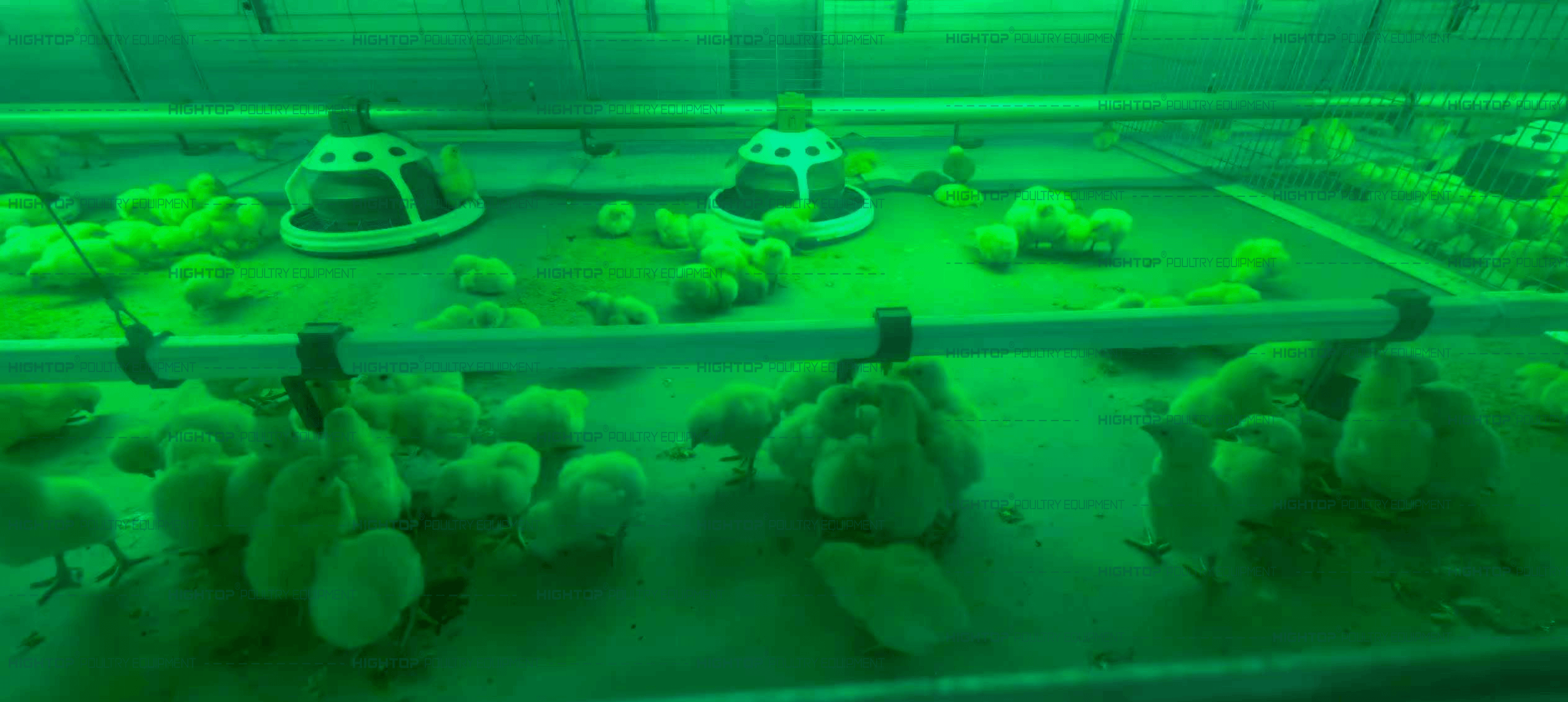
A new batch of white-feather broilers arrived on April 3rd and will be marketed in mid-May.
At 11 days old, birds are still highly sensitive to environmental instability.
To determine the best spring ventilation strategy, we tested two identical broiler houses.
The Two Ventilation Strategies
House 2
Humidity compensation only
(No small cooling pad activated)
House 4
Humidity compensation + double-layer wall small cooling pad activated
Cooling pad cycle:
18 seconds ON / 3000 seconds OFF
The trial began at 10:00 AM.
Starting Conditions (10:00 AM)
| Parameter | House 2 | House 4 |
|---|---|---|
| Indoor Temperature | 31.3°C | 31.1°C |
| Relative Humidity | 55% | 55% |
| Target Humidity | 65% | 65% |
| Compensation Offset | +1.0°C | +1.0°C |
| Adjusted Target Temperature | 30.1°C | 30.1°C |
| Fan Stage | Level 3 | Level 3 |
At the beginning, both houses were essentially identical.
Conditions After 4 Hours (2:00 PM)
| Parameter | House 2 (No Pad) | House 4 (Pad ON) |
|---|---|---|
| Indoor Temperature | 32.0°C | 31.2°C |
| Relative Humidity | 50% | 59% |
| Compensation Offset | +1.5°C | +0.5°C |
| Adjusted Target Temp | 30.8°C | 29.9°C |
| Fan Stage | Level 4 | Level 4 |
| Fan Runtime | 62s ON / 238s OFF | 62s ON / 238s OFF |
Important:
Both houses used exactly the same fan runtime.
This means the only real difference was the small cooling pad operation.
What the Air Actually Felt Like to the Broilers
Temperature alone does not tell the whole story.
Using psychrometric air analysis, we compared the true thermal environment.
House 2 (No Cooling Pad)
32.0°C / 50% RH
- Wet-bulb temperature: 24.5°C
- Dew point: 21.2°C
- Moisture content: 15.2 g/kg dry air
- Total heat (enthalpy): 78.5 kJ/kg
House 4 (Cooling Pad ON)
31.2°C / 59% RH
- Wet-bulb temperature: 25.8°C
- Dew point: 22.4°C
- Moisture content: 17.6 g/kg dry air
- Total heat (enthalpy): 84.3 kJ/kg
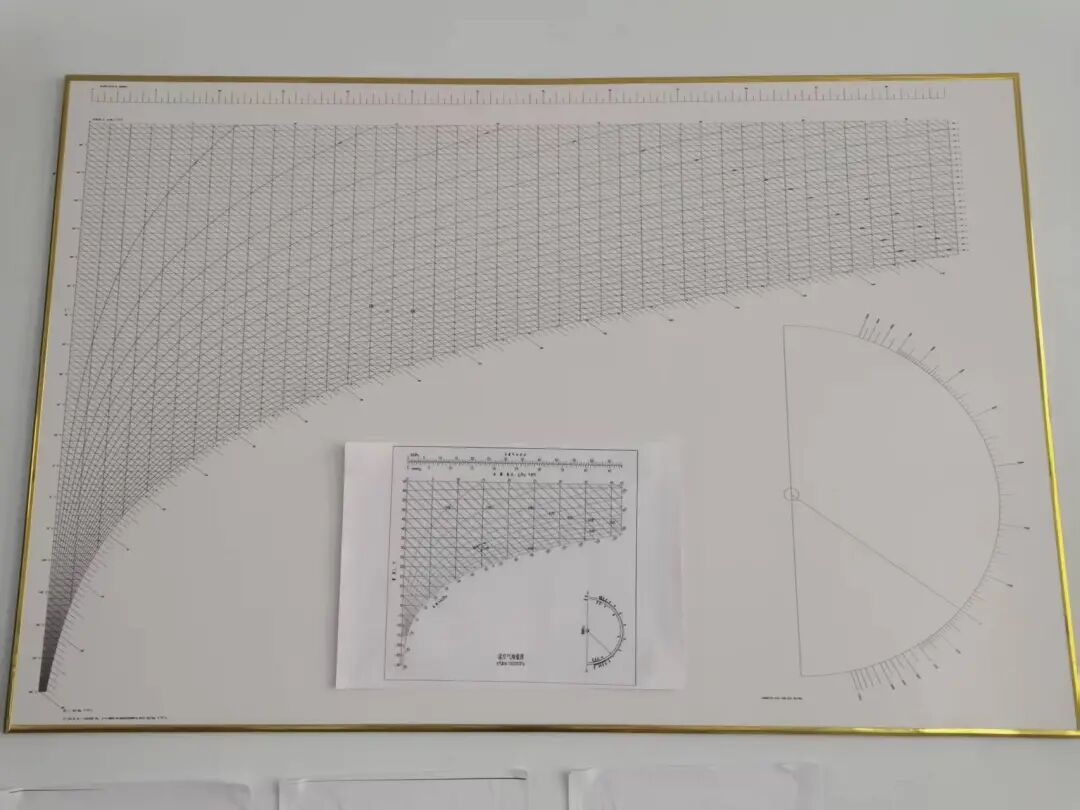
The psychrometric chart is a fundamental graphical tool in the fields of engineering thermodynamics and HVAC, used to characterize and analyze the state of moist air as well as its thermodynamic and moisture-related processes.
Key Experimental Result
At first glance, House 4 looked cooler because air temperature was 0.8°C lower.
Many farmers would assume the birds felt colder.
That is not correct.
Because humidity was higher, House 4 actually held 7.4% more total heat energy:
- House 2: 78.5 kJ/kg
- House 4: 84.3 kJ/kg
This means the broilers in House 4 felt slightly warmer and more comfortable, even though measured air temperature was lower.
More importantly:
The cooling pad reduced the daytime environment difference from nighttime conditions.
This means birds experienced:
✔ Less thermal shock
✔ Better respiratory comfort
✔ More stable body temperature regulation
What We Observed in the Houses
From direct flock observation:
- Bird distribution was normal in both houses
- No visible stress behavior
- No panting
- No crowding
- No obvious activity difference
For 11-day-old broilers, both strategies were acceptable.
But House 4 provided better environmental stability, which becomes more important as birds grow.
Practical Recommendation for Farmers
For Broilers Under 14 Days Old
Ventilation demand is still low.
Air speed inside the house is minimal.
At this stage:
Either strategy works well if compensation settings are correct.
If your house has no small cooling pad system, simply increase daytime target temperature slightly when humidity is low.
This helps balance the birds’ effective temperature.
For Broilers Older Than 14–18 Days
As birds grow:
- Heat production increases
- Fan stages increase
- Air speed rises sharply
Now airflow itself begins cooling the birds.
At this stage, humidity compensation alone becomes less effective.
The better solution is:
Activate small cooling pads or double-layer wall cooling systems
This adds moisture and balances airflow cooling.
The result is much more stable bird comfort between day and night.
This is especially important during spring weather swings.
Why Automated Ventilation Control Matters
Large daily fluctuations require fast and precise adjustment.
Manual control is often too slow.
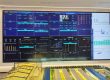
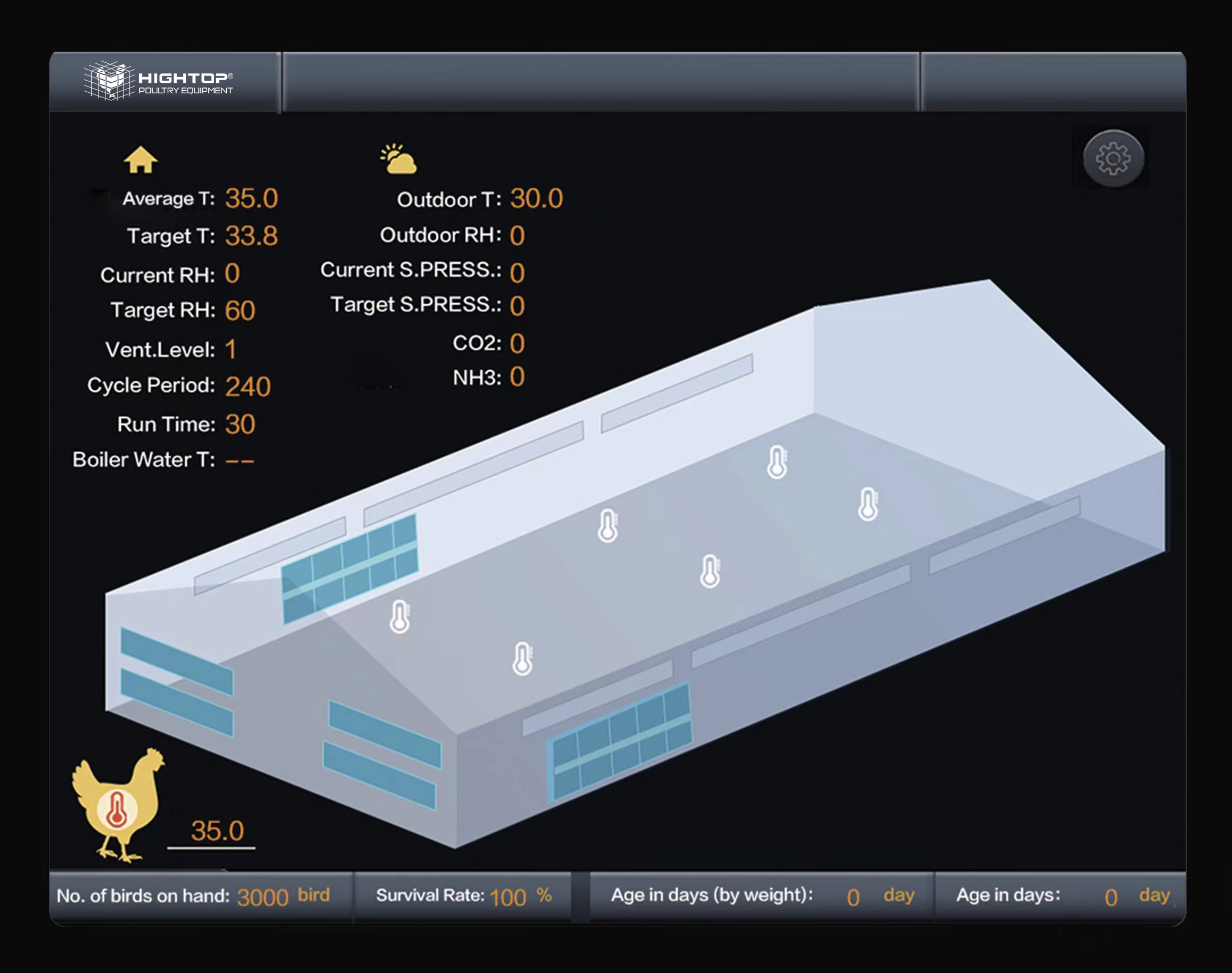
An intelligent broiler ventilation system should automatically manage:
- Variable-speed fan operation
- Cooling pad timing
- Humidity compensation
- Static pressure
- Air inlet opening angle
Real-time monitoring should include:
- Temperature
- Relative humidity
- Ammonia
- Static pressure
This keeps the broiler environment stable 24/7.
Why HIGHTOP Broiler Ventilation Systems Perform Better
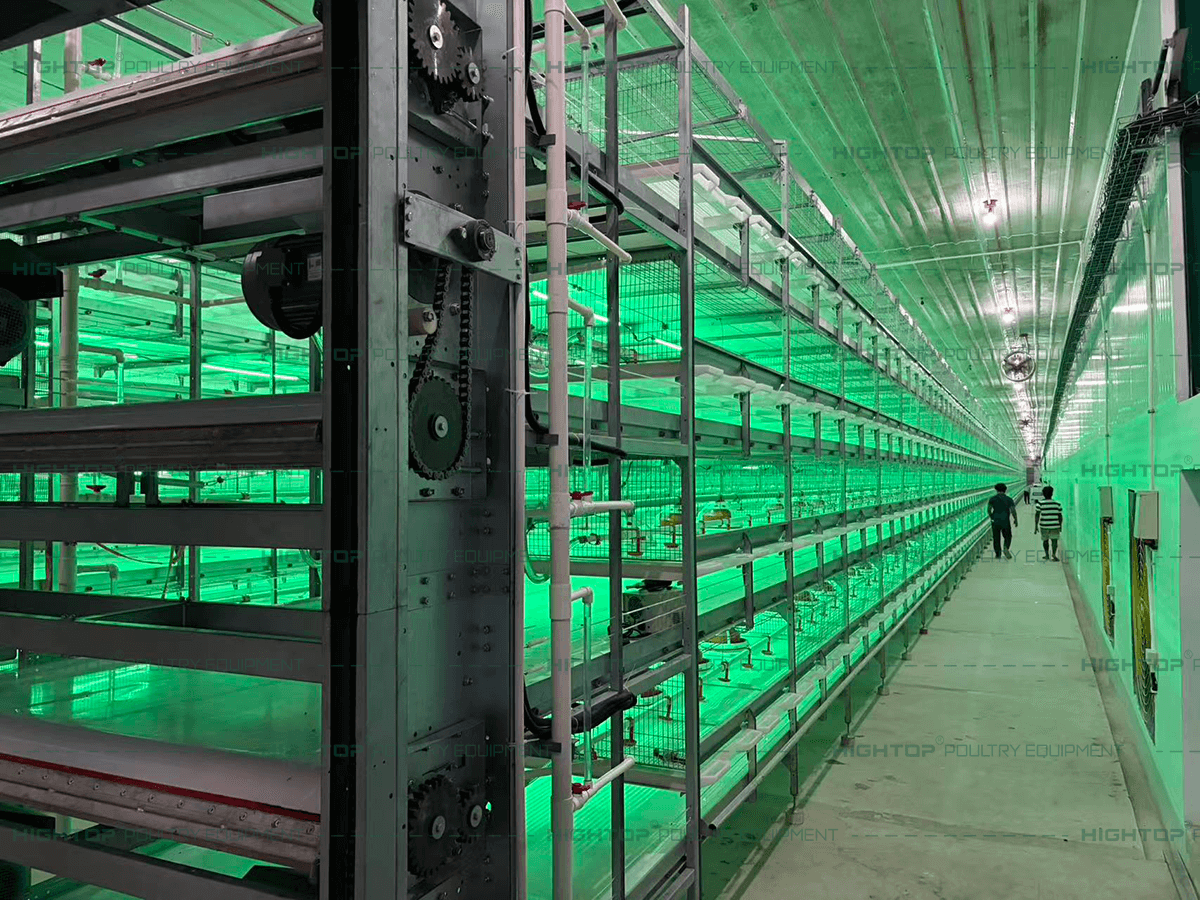
Hebei Hightop Livestock Farming Equipment Co., Ltd. designs complete environmental systems specifically for modern white-feather broiler farms.
A full HIGHTOP system includes:
- Variable-speed tunnel fans
- Precision air inlets
- Double-layer wall cooling pads
- Smart climate controllers
- Real-time environmental sensors
- Centralized automated management platform
Each system is customized according to:
- Broiler house size
- Local climate
- Bird age curve
- Seasonal temperature changes
- Production targets
This ensures broilers remain comfortable through every growth stage.
Final Recommendation
Based on this trial, the conclusion is clear:
If your broilers are still young (under 14 days):
Humidity compensation alone is usually enough.
If birds are entering rapid growth stage (14+ days):
Cooling pad support becomes strongly recommended.
If your farm experiences large spring temperature swings:
An automatic intelligent ventilation system is the most reliable solution.
Good spring ventilation is not about running more fans.
It is about making broilers feel the same level of comfort all day and all night.
When that happens:
- Birds eat better
- Respiratory stress decreases
- Growth stays uniform
- Feed conversion improves
- Final market weight becomes more stable
That is the real value of scientific broiler ventilation management.
Request A Quote
Please contact us or get quote via the contact form below, we’ll get back to you as soon as possible.